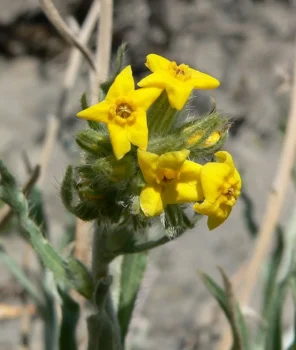
Basin Yellow Cryptantha: A Hidden Gem for Water-Wise Gardens
If you’re looking for a tough, drought-tolerant native plant that doesn’t demand much attention but delivers reliable beauty, meet the basin yellow cryptantha (Cryptantha confertiflora). Despite its somewhat misleading common name, this hardy perennial actually produces clusters of tiny white flowers, not yellow ones. Sometimes you’ll see it listed under its old botanical name, Oreocarya confertiflora, but don’t let the name confusion fool you – this little powerhouse is worth getting to know.
Where Does Basin Yellow Cryptantha Call Home?
This resilient native is a true child of the American Southwest, naturally occurring across Arizona, California, Nevada, and Utah. It’s perfectly adapted to the challenging conditions of basin and desert regions, where it has learned to thrive in sandy washes, rocky slopes, and areas that would make other plants throw in the towel.
- Species observed
- No observations
What Makes This Plant Special?
Basin yellow cryptantha is what botanists call a forb – essentially a flowering plant that stays relatively low and doesn’t develop woody stems like shrubs or trees. As a perennial, it’ll come back year after year once established, forming neat, compact clumps that rarely exceed a foot in height. The real charm lies in its dense clusters of small, white flowers that create a delicate, almost lacy appearance in late spring and early summer.
Why Your Garden (and Local Pollinators) Will Love It
Here’s where basin yellow cryptantha really shines:
- Pollinator magnet: Those tiny white flowers are perfectly sized for small native bees and other beneficial insects
- Drought champion: Once established, it laughs at dry spells that would stress other plants
- Low maintenance: No fussing with fertilizers or frequent watering required
- Native credentials: Supporting local ecosystems while reducing your garden’s environmental footprint
- Versatile placement: Works beautifully in rock gardens, as groundcover, or tucked between larger native shrubs
Perfect Spots for Planting
Basin yellow cryptantha is ideal for gardeners embracing water-wise landscaping or those dealing with challenging, dry sites. It’s particularly well-suited for:
- Desert and xeric gardens
- Rock gardens and gravelly areas
- Native plant landscapes
- Slopes and areas with poor, sandy soil
- Low-water-use garden sections
Growing Conditions That Make It Happy
The good news is that basin yellow cryptantha isn’t picky – in fact, trying to pamper it might backfire. Here’s what it prefers:
- Sunlight: Full sun is best, though it can tolerate some light shade
- Soil: Well-draining sandy, gravelly, or rocky soil – heavy clay is its enemy
- Water: Minimal once established; overwatering can actually harm it
- Climate: Hardy in USDA zones 4-9, handling both cold winters and hot summers
Planting and Care Tips for Success
Getting basin yellow cryptantha established is straightforward if you keep its desert origins in mind:
- Best planting time: Fall or early spring when temperatures are moderate
- Soil preparation: If your soil holds water, add sand or small gravel to improve drainage
- Initial watering: Water regularly for the first few weeks, then gradually reduce frequency
- Long-term care: Once established, water only during extended dry periods
- Fertilizing: Skip it entirely – rich soil can make the plant weak and floppy
- Pruning: Remove spent flower heads if desired, but it’s not necessary
Is Basin Yellow Cryptantha Right for Your Garden?
This native beauty is perfect for gardeners who appreciate subtle charm over flashy blooms, and who want to support local wildlife while conserving water. It’s particularly valuable if you’re creating habitat for native pollinators or dealing with areas where other plants struggle.
However, if you’re looking for bold, colorful displays or plants for consistently moist areas, you might want to consider other options. Basin yellow cryptantha is all about quiet elegance and environmental benefits rather than showstopping color.
With its combination of drought tolerance, pollinator appeal, and low-maintenance nature, basin yellow cryptantha proves that sometimes the most understated plants make the biggest difference in creating sustainable, wildlife-friendly gardens.