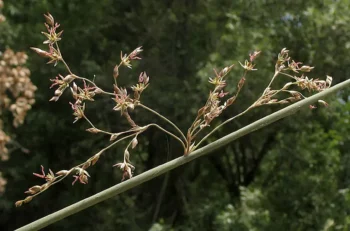
Basket Rush: California’s Native Water-Loving Wonder
If you’re looking to add some elegant, low-maintenance greenery to your water garden or soggy backyard spot, let me introduce you to basket rush. This California native has been quietly doing its thing in wetlands across the Golden State for centuries, and it’s ready to bring that same effortless charm to your landscape.
What Exactly Is Basket Rush?
Basket rush (Juncus textilis) is a perennial grass-like plant that belongs to the rush family. Don’t let the grass-like description fool you into thinking it’s boring – this plant has personality! It forms dense, fountain-like clumps of slender, cylindrical stems that stand upright like nature’s own fiber optic display. The stems range from bright green to an attractive blue-green color and keep their good looks year-round.
Where Does It Call Home?
This rush is a true California native, found naturally throughout the state in various wetland habitats. From coastal marshes to inland waterways, basket rush has made itself at home wherever there’s consistent moisture. It’s perfectly adapted to California’s unique climate and growing conditions.
- Species observed
- No observations
Why Your Garden Will Love Basket Rush
Here’s where basket rush really shines in the landscape department:
- Water garden superstar: Perfect for pond edges, stream banks, and rain gardens
- Texture master: Those fine, upright stems add incredible vertical interest and movement
- Year-round appeal: Maintains its structure and color through all seasons
- Low maintenance: Once established, it pretty much takes care of itself
- Wildlife habitat: Provides cover and nesting material for various creatures
Perfect Garden Situations
Basket rush isn’t for every garden spot, but when you have the right conditions, it’s absolutely perfect for:
- Wetland and bog gardens
- Rain gardens and bioswales
- Pond and water feature margins
- Native plant gardens with irrigation
- Restoration projects in wet areas
Growing Conditions: Keep It Wet!
The key to happy basket rush is simple: water, water, water. This plant thrives in consistently moist to wet conditions and will adapt to various soil types as long as they stay damp. In nature, it grows in areas that range from just moist to completely saturated.
Basket rush does best in full sun but will tolerate partial shade. It’s hardy in USDA zones 8-10, making it perfect for most of California and similar Mediterranean climates.
Planting and Care Made Simple
Getting basket rush established is surprisingly straightforward:
- Best planting time: Spring, when the growing season is just getting started
- Soil prep: Ensure your planting area stays consistently moist – this isn’t a plant for well-draining spots
- Spacing: Plant clumps about 2-3 feet apart for a naturalistic look
- Watering: Keep soil consistently moist to wet, especially during establishment
- Maintenance: Minimal! You can cut back old growth in late winter if desired, but it’s not necessary
Special Considerations
Basket rush has an interesting wetland status that varies by region. In California’s Arid West areas, it’s considered a facultative wetland plant, meaning it usually grows in wetlands but can occasionally pop up in drier spots. However, in the Western Mountains, Valleys, and Coast regions, it’s an obligate wetland plant – almost always found in wet conditions.
This information is super helpful for gardeners because it tells you exactly what this plant needs to thrive: consistent moisture is non-negotiable.
The Bottom Line
Basket rush might not be the flashiest plant in your garden center, but if you have a wet spot that needs some elegant, low-maintenance greenery, this California native is your friend. It brings authentic regional character to water features while providing year-round structure and habitat value. Just remember – this isn’t a plant for dry gardens, but in the right wet conditions, it’s absolutely perfect.
Whether you’re creating a rain garden, naturalizing a pond edge, or restoring a wetland area, basket rush offers that perfect combination of beauty, function, and California authenticity that makes native gardening so rewarding.