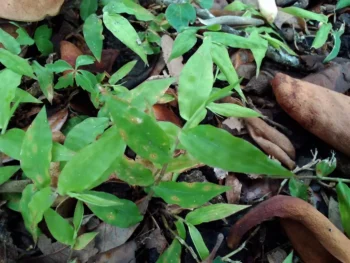
Basketgrass: A Native Ground Cover for Shady Spaces
If you’re looking for a native grass that thrives in the shadows where other plants struggle, basketgrass (Oplismenus hirtellus setarius) might just be your new best friend. This humble perennial grass is one of those unsung heroes of the native plant world – not flashy, but incredibly useful for solving common garden challenges.
What Makes Basketgrass Special?
Basketgrass is a true native, naturally occurring across much of the southeastern United States and extending into our Caribbean territories. As a perennial grass, it comes back year after year, forming dense, low-growing mats that make excellent ground cover. Think of it as nature’s carpet for your shady spots.
You might also see this plant listed under several scientific synonyms, including Oplismenus compositus var. setarius or Panicum setarium, but don’t let the name confusion fool you – it’s all the same dependable plant.
Where Does Basketgrass Call Home?
This adaptable grass has quite an impressive native range, spanning from the mid-Atlantic down through the Deep South and into the Caribbean. You’ll find wild populations thriving in Alabama, Arkansas, Florida, Georgia, Louisiana, Mississippi, Missouri, North Carolina, Oklahoma, South Carolina, Texas, Virginia, Puerto Rico, and the U.S. Virgin Islands.
- Species observed
- No observations
Why Consider Basketgrass for Your Garden?
Here’s where basketgrass really shines – it’s the perfect solution for those tricky shaded areas where you want something green and natural-looking but don’t want high maintenance. Here are some compelling reasons to give it a try:
- Excellent ground cover for woodland gardens and naturalized areas
- Thrives in shade where many other plants struggle
- Helps prevent soil erosion with its spreading growth habit
- Low maintenance once established
- Supports local ecosystems as a native species
- Creates a natural, informal look in landscape design
Growing Basketgrass Successfully
The beauty of basketgrass lies in its simplicity. This is not a plant that demands constant attention or perfect conditions. Here’s what you need to know:
Climate Requirements: Basketgrass is best suited for USDA hardiness zones 8-11, which aligns perfectly with its natural southeastern range. If you’re gardening in these zones, you’re in luck!
Light Conditions: This grass actually prefers shade to partial shade – making it perfect for those challenging spots under trees or on the north side of buildings where sun-loving plants just won’t cooperate.
Soil Preferences: Basketgrass appreciates moist, well-draining soils typical of woodland environments. It’s not particularly picky about soil type, but consistent moisture will keep it happiest.
Planting and Care Tips
Getting basketgrass established is refreshingly straightforward:
- Plant in spring after the last frost when soil is warming up
- Space plantings to allow for natural spreading
- Water regularly during the first growing season to establish strong roots
- Once established, it’s quite drought-tolerant but performs best with consistent moisture
- Little to no fertilization needed – this grass is adapted to woodland soils
- Minimal pruning required; you can trim back in late winter if desired
Design Ideas and Garden Roles
Basketgrass works beautifully in several landscape scenarios:
- Woodland gardens as a naturalistic ground cover
- Erosion control on shaded slopes
- Informal pathway edges in natural settings
- Under tree canopies where lawn grass won’t grow
- Rain gardens and other moisture-retentive areas
A Few Things to Keep in Mind
While basketgrass is generally well-behaved, it does spread naturally through underground stems (stolons). This is great for ground cover purposes but means you should plant it where you want it to naturalize rather than in formal garden beds where precise boundaries matter.
As a wind-pollinated grass, basketgrass won’t attract butterflies and bees like flowering natives do, but it does provide habitat and food sources for various wildlife, particularly birds that may eat the seeds.
The Bottom Line
Basketgrass might not win any beauty contests, but it’s exactly the kind of reliable, native ground cover that makes gardening easier and more sustainable. If you have shady areas that need covering, challenging slopes that need stabilizing, or you simply want to add more native plants to support local ecosystems, basketgrass deserves serious consideration.
It’s one of those plants that quietly does its job, year after year, asking for very little in return. Sometimes that’s exactly what our gardens – and our busy lives – need most.