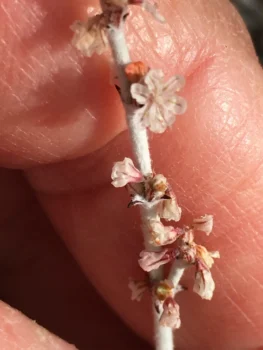
Bastardsage: A Hardy Native Perennial for Desert Gardens
If you’re looking for a tough, drought-tolerant native plant that can handle the harsh conditions of the American Southwest, bastardsage (Eriogonum wrightii var. nodosum) might just be your new best friend. This resilient perennial herb brings subtle beauty and ecological value to gardens while asking for very little in return.
Meet the Bastardsage
Bastardsage is a native perennial forb that belongs to the buckwheat family. As a true native of the lower 48 states, this plant has been thriving in the wild landscapes of Arizona and California long before gardeners discovered its potential. You might also encounter it in botanical references under its synonyms Eriogonum nodosum or Eriogonum wrightii ssp. nodosum.
Unlike woody shrubs or trees, bastardsage is classified as a forb herb—essentially a vascular plant that stays relatively soft and herbaceous without developing significant woody tissue above ground. Its perennating buds remain at or below the soil surface, helping it survive harsh conditions year after year.
Where Does Bastardsage Call Home?
This hardy native has carved out its niche primarily in Arizona and California, where it’s adapted to the challenging desert and semi-arid environments of the Southwest. In these regions, it’s perfectly at home in the rocky, sandy soils that would challenge many other garden plants.
- Species observed
- No observations
Why Choose Bastardsage for Your Garden?
There are several compelling reasons to consider adding bastardsage to your landscape:
- Drought tolerance: Once established, this plant thrives with minimal water, making it perfect for xeriscaping and water-wise gardens
- Native plant benefits: As a true native, it supports local ecosystems and requires fewer resources than non-native alternatives
- Pollinator magnet: The small, clustered flowers attract bees, butterflies, and other beneficial pollinators
- Low maintenance: Perfect for gardeners who want beauty without constant fussing
- Unique aesthetic: Offers a different texture and form compared to typical garden plants
Garden Design and Landscape Role
Bastardsage works beautifully in several garden settings:
- Desert and xeriscape gardens: Natural choice for water-wise landscaping
- Rock gardens: Thrives among rocks and in well-draining conditions
- Native plant gardens: Essential component of authentic Southwestern plant communities
- Naturalized areas: Excellent for creating low-maintenance, wildlife-friendly spaces
- Ground cover: Can serve as an alternative to traditional lawn in appropriate climates
Growing Conditions and Care
The beauty of bastardsage lies in its simplicity. This plant is adapted to USDA hardiness zones 8-10, making it suitable for much of the southwestern United States.
Ideal growing conditions include:
- Sunlight: Full sun exposure for best performance
- Soil: Well-draining sandy or rocky soils; avoid heavy clay or constantly moist conditions
- Water: Low water requirements once established; drought-tolerant
- pH: Tolerates a range of soil pH levels typical of desert soils
Planting and Care Tips
Getting bastardsage established in your garden is straightforward:
- Timing: Plant in fall or early spring when temperatures are moderate
- Watering: Provide occasional water during establishment, then reduce significantly
- Soil preparation: Ensure excellent drainage; consider adding sand or gravel to heavy soils
- Maintenance: Minimal pruning needed; remove spent flowers if desired
- Fertilization: Generally unnecessary; this plant prefers lean soils
A Note on Conservation
Bastardsage has a somewhat unclear conservation status (listed as S5T3? with undefined meaning), so while it’s not considered critically rare, it’s always wise to source your plants responsibly from reputable native plant nurseries rather than collecting from wild populations.
Is Bastardsage Right for Your Garden?
If you live in zones 8-10 and are looking for a low-maintenance, native plant that supports local wildlife while requiring minimal water, bastardsage could be an excellent choice. It’s particularly well-suited for gardeners who appreciate subtle beauty over flashy blooms and want to create sustainable, regionally appropriate landscapes.
However, if you’re looking for a plant that provides constant color or needs regular water to look its best, you might want to consider other options. Bastardsage is all about understated elegance and ecological function rather than garden drama.
With its combination of hardiness, native status, and pollinator benefits, bastardsage represents the best of what native gardening has to offer—beauty that works in harmony with nature rather than against it.