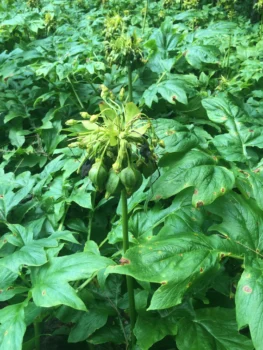
Batflower: The Mysterious Black Beauty That’s Definitely Not Your Average Garden Plant
If you’re looking to add some serious drama to your garden, meet the batflower (Tacca leontopetaloides) – a plant so unusual that visitors will either be completely mesmerized or slightly spooked. With its jet-black flowers and otherworldly appearance, this perennial herb brings a touch of gothic elegance to tropical landscapes.
What Exactly Is a Batflower?
The batflower is a fascinating herbaceous perennial that belongs to the yam family. Don’t let the herb classification fool you – this isn’t something you’ll be adding to your pasta sauce. As a forb, it’s a non-woody plant that dies back to underground tubers during dormant periods, only to emerge again when conditions are right.
You might also see this plant listed under its synonyms Tacca involucrata or Tacca pinnatifida in older gardening references, but they’re all the same wonderfully weird plant.
Where Does the Batflower Call Home?
Originally native to the tropical Pacific Basin (excluding Hawaii), Southeast Asia, and northern Australia, the batflower has made itself at home in Hawaii, Guam, and Palau. It’s considered non-native to Hawaii but has established itself there, reproducing naturally without human intervention.
- Species observed
- No observations
The Batflower’s Dramatic Appeal
Let’s be honest – this plant is all about the wow factor. The batflower produces some of the most unusual blooms you’ll ever see:
- Deep black or dark purple flowers that seem to absorb light
- Long, thread-like bracts that can extend up to 10 inches, resembling bat wings or whiskers
- Large, deeply lobed leaves that create a lush tropical backdrop
- An overall mysterious appearance that makes it a conversation starter
Why You Might Want to Grow Batflower
The batflower isn’t for everyone, but it’s perfect for gardeners who love unique, exotic plants. It works beautifully as a specimen plant in shade gardens or as part of a tropical-themed landscape. The unusual flowers actually serve an important ecological function – they attract flies and small beetles as pollinators, adding to your garden’s biodiversity.
Since it’s facultative regarding wetlands, the batflower is quite adaptable to different moisture conditions, making it easier to incorporate into various garden settings.
Growing Conditions: Creating the Perfect Bat Cave
To keep your batflower happy, think tropical paradise rather than desert oasis:
- Light: Partial to full shade – direct sunlight can scorch the leaves
- Soil: Well-draining but consistently moist, rich in organic matter
- Humidity: High humidity is essential – this plant loves a steamy environment
- Temperature: Warm temperatures year-round; only hardy in USDA zones 10-12
- Protection: Shield from strong winds that can damage the large leaves
Planting and Care Tips
Growing batflower successfully requires attention to its natural growth cycle:
- Plant tubers in spring when temperatures consistently stay above 65°F
- Provide consistent moisture during the growing season, but avoid waterlogged conditions
- Allow for a natural dormancy period where the plant dies back
- In colder climates, grow in containers that can be moved indoors or heated greenhouses
- Mulch around the base to maintain soil moisture and temperature
A Word About Native Alternatives
While the batflower isn’t invasive or harmful, gardeners interested in supporting local ecosystems might consider native alternatives that provide similar dramatic appeal. Depending on your location, native aroids, gingers, or other tropical foliage plants might offer comparable visual interest while supporting local wildlife.
Is Batflower Right for Your Garden?
The batflower is ideal for adventurous gardeners who appreciate unusual plants and can provide the specific growing conditions it needs. It’s not the easiest plant to grow, but for those willing to create a humid, shaded environment, it offers unmatched exotic appeal.
Just remember – this is definitely a plant that will get people talking. Whether that’s a good thing or not depends on how much you enjoy explaining why you have something that looks like it belongs in a witch’s garden growing in your backyard!