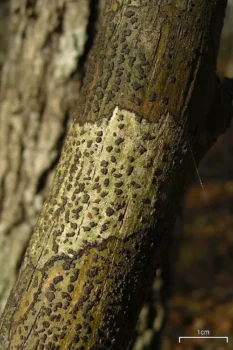
Discovering Bathelium carolinianum: A Tiny Lichen with Big Ecological Impact
If you’ve ever taken a close look at the bark of trees in your garden or local forest, you might have noticed what appears to be patches of crusty growth. Meet Bathelium carolinianum, a fascinating little lichen that’s quietly going about its business as one of nature’s most underappreciated team players.
What Exactly Is Bathelium carolinianum?
Let’s clear up any confusion right away – Bathelium carolinianum isn’t a plant you can pick up at your local nursery. It’s actually a lichen, which is essentially a partnership between a fungus and an algae living together in perfect harmony. Think of it as nature’s original roommate situation, except both parties actually benefit from the arrangement!
This particular lichen is native to North America and was previously known by the scientific name Trypethelium carolinianum. Like many lichens, it doesn’t have a widely recognized common name, which probably explains why most gardeners walk right past it without a second glance.
Where You’ll Find This Tiny Tenant
Bathelium carolinianum calls the southeastern United States home, particularly thriving in the coastal plain regions where humidity levels stay nice and high. You won’t find this lichen growing in specific USDA hardiness zones because, well, it doesn’t need to be planted – it shows up all on its own when conditions are just right.
Spotting Bathelium carolinianum in Your Garden
Here’s where things get interesting for the observant gardener. This lichen forms small, crusty patches on tree bark, and while it might not win any beauty contests, it’s actually quite remarkable once you know what to look for:
- Forms thin, crusty patches directly on bark surfaces
- Appears as small, inconspicuous growths that blend with the tree bark
- Typically found on various tree species in humid environments
- More common in areas with good air quality
Is This Lichen Good for Your Garden?
Absolutely! While Bathelium carolinianum might not add a pop of color to your landscape design, it’s actually a fantastic indicator that your garden ecosystem is healthy. Here’s why you should be happy to spot this little guy:
- Acts as a natural air quality monitor – lichens are sensitive to pollution
- Contributes to biodiversity in your garden ecosystem
- Doesn’t harm the trees it grows on
- Helps create microhabitats for tiny creatures
The Hands-Off Approach
Here’s the beautiful thing about Bathelium carolinianum – it requires absolutely zero maintenance from you. You can’t plant it, you don’t need to water it, and you definitely don’t need to fertilize it. In fact, the best thing you can do for this lichen is simply leave it alone.
If you’re lucky enough to have this lichen appearing naturally in your garden, consider it a sign that you’re doing something right environmentally. It means your air quality is decent, your trees are healthy, and you’ve got a nice humid microclimate going on.
A Small Player in a Big Ecosystem
While Bathelium carolinianum might not be the showstopper of your garden, it’s part of the intricate web of life that makes healthy ecosystems tick. Next time you’re wandering around your yard, take a moment to appreciate these tiny partnerships quietly doing their part to keep our natural world in balance. Who knows? You might just develop a new appreciation for the small wonders that have been there all along.