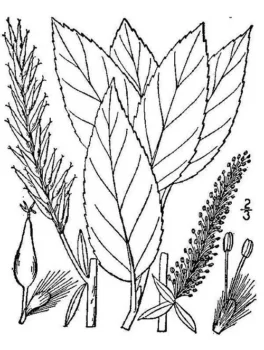
Bayberry Willow: A Hardy Native Shrub for Wet Spots in Your Garden
If you’ve got a soggy spot in your yard that seems impossible to plant, meet your new best friend: the bayberry willow (Salix myricoides). This tough-as-nails native shrub doesn’t just tolerate wet conditions—it absolutely thrives in them. While most plants would throw a fit about wet feet, this willow species practically does a happy dance in marshy conditions.
What Is Bayberry Willow?
Bayberry willow is a perennial, multi-stemmed woody shrub that typically grows to be less than 13-16 feet tall, though it often stays much more compact in garden settings. As a true native plant, it has deep roots in North American ecosystems and has been quietly doing its job of stabilizing wet soils and feeding wildlife for centuries.
Where You’ll Find This Native Beauty
This willow is a true northerner, calling a impressive swath of North America home. You’ll find bayberry willow growing naturally across Canada in New Brunswick, Ontario, Quebec, and Newfoundland, and throughout much of the northern United States including Connecticut, Illinois, Indiana, Maine, Massachusetts, Michigan, Minnesota, New Hampshire, Ohio, Pennsylvania, Rhode Island, Vermont, and Wisconsin.
- Species observed
- No observations
Why Your Garden (and Local Wildlife) Will Love It
Here’s where bayberry willow really shines as a garden performer:
- Pollinator magnet: Those cheerful yellow-green catkins that appear in early spring are like opening a five-star restaurant for hungry bees and other pollinators emerging from winter
- Problem solver: Got erosion issues near a pond or stream? This shrub’s root system is nature’s own erosion control system
- Low maintenance: Once established, it pretty much takes care of itself—no fussy watering schedules or constant attention required
- Wildlife habitat: Birds and small mammals appreciate both the shelter and the insects that call this shrub home
Perfect Growing Conditions
Bayberry willow is refreshingly honest about what it wants:
- Moisture: Consistently moist to wet soil is ideal—this plant actually enjoys what would be considered overwatering for most garden plants
- Sun exposure: Full sun to partial shade works well, though it’ll be happiest with at least 6 hours of direct sunlight
- Climate: Hardy in USDA zones 2-6, making it perfect for northern gardens that experience real winters
- Soil type: Not particularly picky about soil composition, as long as it stays moist
Wetland Wonder
One of bayberry willow’s superpowers is its wetland status. Classified as Facultative Wetland across multiple regions (Atlantic and Gulf Coastal Plain, Eastern Mountains and Piedmont, Midwest, and Northcentral & Northeast), this means it usually lives in wetlands but can adapt to drier conditions if needed. Think of it as bilingual—fluent in both swamp and regular garden soil.
Where to Use Bayberry Willow in Your Landscape
This versatile native works beautifully in several garden scenarios:
- Rain gardens: Perfect for managing stormwater runoff while adding natural beauty
- Pond edges: Creates a natural transition between water and land
- Low-lying areas: Turn that perpetually soggy spot into a feature rather than a problem
- Wildlife gardens: Essential for creating habitat corridors and supporting native ecosystems
- Naturalized landscapes: Ideal for those wanting a more wild, less manicured garden aesthetic
Planting and Care Tips
Getting bayberry willow established is surprisingly straightforward:
- Timing: Plant in spring or fall when temperatures are moderate
- Location: Choose the wettest spot in your yard—seriously, this plant will thank you
- Spacing: Allow 6-8 feet between plants if you’re creating a grouping
- Watering: Keep consistently moist the first growing season; after that, natural rainfall should suffice in most areas
- Pruning: If needed, prune in late winter before new growth begins—but honestly, this shrub looks great au naturel
- Fertilizing: Generally unnecessary; this tough native has evolved to thrive in nutrient-variable conditions
The Bottom Line
Bayberry willow might not have the flashy flowers of a hydrangea or the architectural presence of a boxwood, but it offers something increasingly valuable: a reliable, native solution for challenging growing conditions. If you’re dealing with wet areas, want to support local pollinators and wildlife, or simply appreciate plants that do their job without drama, this unassuming willow deserves a spot in your landscape. Plus, there’s something deeply satisfying about working with nature rather than against it—and bayberry willow is all about that harmonious gardening life.