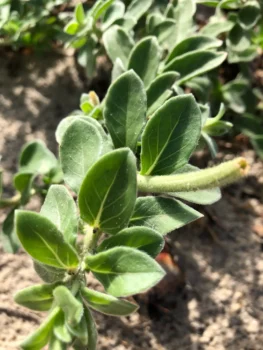
Beach Evening Primrose: A Coastal Native That Shines After Dark
If you’re looking for a tough-as-nails native plant that can handle sandy soil, salt spray, and still put on a beautiful show, meet the beach evening primrose (Oenothera drummondii). This charming perennial might just be the perfect addition to your coastal garden or any landscape that needs a resilient, low-maintenance ground cover.
What Makes Beach Evening Primrose Special
Beach evening primrose is a native herbaceous perennial that belongs to the evening primrose family. Unlike many garden flowers that close up shop when the sun goes down, this plant is just getting started! Its bright yellow, four-petaled flowers open in the evening and stay open through the night, creating a magical moonlit display in your garden.
This plant is also known by its scientific name Oenothera drummondii, and you might occasionally see it listed under the synonym Raimannia drummondii in older gardening references.
Where Beach Evening Primrose Calls Home
As a true native of the southeastern United States, beach evening primrose naturally occurs in Florida, Louisiana, North Carolina, South Carolina, and Texas. You’ll typically find it growing wild in coastal dunes, sandy beaches, and other seaside environments where many plants simply can’t survive.
- Species observed
- No observations
Why Your Garden Will Love This Coastal Beauty
Beach evening primrose brings several wonderful qualities to the landscape:
- Stunning yellow blooms that open in evening and attract nocturnal pollinators like moths
- Excellent ground cover that spreads naturally through runners
- Exceptional salt tolerance makes it perfect for coastal properties
- Drought tolerance once established means less watering for you
- Long blooming season from spring through fall
- Low maintenance requirements – perfect for busy gardeners
Perfect Garden Settings
This versatile native shines in several garden styles:
- Coastal and seaside gardens where salt tolerance is crucial
- Xeriscapes and drought-tolerant landscapes
- Naturalized areas where you want a wild look
- Sandy or poor soil areas where other plants struggle
- Moon gardens designed for evening enjoyment
Growing Conditions and Care
Beach evening primrose is refreshingly easy to please. Here’s what it needs to thrive:
Sunlight: Full sun is best, though it can tolerate some light shade
Soil: Sandy, well-draining soil is ideal – it actually prefers poor to average soil conditions
Water: Drought tolerant once established, but appreciates occasional watering during dry spells
Climate: Hardy in USDA zones 8-10, making it perfect for warmer coastal regions
Planting and Care Tips
Getting started with beach evening primrose is wonderfully straightforward:
- Plant in spring after the last frost date
- Space plants 12-18 inches apart to allow for natural spreading
- Water regularly during the first growing season to establish roots
- Once established, this plant is quite self-sufficient
- Cut back spent flowers and foliage after the blooming season
- The plant will spread via runners, creating a natural ground cover over time
Supporting Local Wildlife
By choosing this native plant, you’re not just beautifying your landscape – you’re supporting local ecosystems. Beach evening primrose attracts moths and other nocturnal pollinators, providing them with essential nectar sources. Its native status means it has co-evolved with local wildlife and fits naturally into the regional food web.
Is Beach Evening Primrose Right for Your Garden?
Beach evening primrose is an excellent choice if you:
- Live in zones 8-10 with sandy or well-draining soil
- Want a low-maintenance native plant
- Need something that can handle coastal conditions
- Appreciate evening-blooming flowers
- Want to support native pollinators
- Are looking for effective ground cover
However, keep in mind that this plant does spread via runners, so it might not be the best choice for formal garden beds where you want strict boundaries. It’s also specifically adapted to warmer climates, so gardeners in cooler zones should look for other native evening primrose species better suited to their region.
Beach evening primrose proves that native plants can be both beautiful and practical. With its cheerful yellow blooms, tough coastal constitution, and minimal care requirements, it’s a wonderful way to bring a piece of the native southeastern landscape to your own backyard.