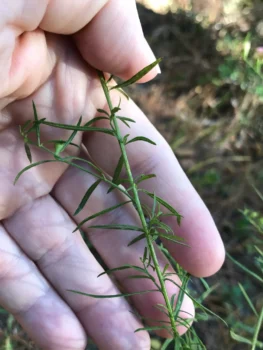
Beach False Foxglove: A Delicate Native Annual Worth Protecting
Meet the beach false foxglove (Agalinis fasciculata), a charming native annual that’s been quietly gracing American landscapes long before European settlers arrived. This delicate wildflower might not be the showiest plant in your garden, but it packs a surprising punch when it comes to supporting local wildlife and adding subtle late-season beauty to your landscape.
What Makes Beach False Foxglove Special?
Beach false foxglove is a native forb – essentially a soft-stemmed herbaceous plant that completes its entire life cycle in just one growing season. Despite its delicate appearance, this little powerhouse has adapted to thrive across a remarkably wide range of conditions, from coastal areas to inland prairies.
The plant produces small, tubular pink to purple flowers that bloom from late summer into fall, providing crucial nectar when many other wildflowers have finished their show. Its fine, almost thread-like foliage gives it an airy, delicate appearance that works beautifully as a supporting player in wildflower gardens.
Where You’ll Find It Growing Wild
This adaptable native has made itself at home across much of the eastern and central United States, naturally occurring in 23 states from the Atlantic coast to the Great Plains. You can find beach false foxglove growing wild in Alabama, Arkansas, Delaware, Florida, Georgia, Illinois, Indiana, Kansas, Kentucky, Louisiana, Maryland, Mississippi, Missouri, New Jersey, New York, North Carolina, Oklahoma, Pennsylvania, South Carolina, Tennessee, Texas, Virginia, and even Puerto Rico.
- Species observed
- No observations
A Plant That Needs Our Help
Here’s where things get serious: beach false foxglove is facing conservation challenges in several parts of its range. In some areas, it’s classified as critically imperiled, meaning there are typically fewer than 1,000 individuals remaining. In Alabama and Georgia, it holds an S1 conservation status, indicating extreme rarity.
This is exactly why home gardeners can make a real difference. By choosing to grow native plants like beach false foxglove, you’re not just creating a beautiful garden – you’re participating in conservation efforts right in your own backyard.
Why Your Garden (and Local Wildlife) Will Love It
Beach false foxglove might be small, but it punches above its weight class when it comes to supporting wildlife. Research shows it provides 5-10% of the diet for various large animals, and its late-season blooms are a lifeline for pollinators preparing for winter.
The plant’s tubular flowers are perfectly sized for:
- Native bees seeking late-season nectar
- Butterflies making their final migrations
- Other small pollinators that need autumn fuel
Perfect Garden Situations
Beach false foxglove shines in several garden settings:
- Wildflower meadows: Adds delicate texture and late-season color
- Native plant gardens: Provides authentic regional character
- Coastal gardens: Naturally adapted to sandy, well-draining conditions
- Prairie restorations: Fills the important late-blooming niche
- Naturalized areas: Requires minimal maintenance once established
Growing Conditions That Make It Happy
One of the best things about beach false foxglove is its adaptability. This plant has facultative wetland status in most regions, meaning it’s equally comfortable in both wet and dry conditions – though it generally prefers the drier side of that spectrum.
Give your beach false foxglove:
- Full sun: At least 6 hours of direct sunlight daily
- Well-draining soil: Sandy or loamy soils work best
- USDA zones 6-10: As an annual, it’s quite adaptable to different climates
- Minimal fertility: Actually prefers poorer soils over rich, amended ones
Planting and Care Made Simple
The beauty of growing beach false foxglove lies in its simplicity. As a true annual, it’s meant to complete its life cycle with minimal fuss:
Planting: Direct seed in early spring after the last frost. The seeds are small, so scatter them lightly over prepared soil and barely cover them. You can also start seeds indoors 6-8 weeks before your last frost date.
Watering: Water regularly during germination and establishment, then back off. Once established, this drought-tolerant native can handle dry spells with grace.
Maintenance: Practically none required! Let the plants go to seed naturally to ensure next year’s crop and provide food for seed-eating birds.
The Responsible Gardener’s Approach
Given beach false foxglove’s conservation status, it’s crucial to source your seeds or plants responsibly. Look for:
- Native plant nurseries that propagate their own stock
- Seed companies that collect sustainably from abundant populations
- Local native plant society seed swaps
- Conservation organizations selling responsibly sourced seeds
Avoid collecting from wild populations, especially in areas where the plant is rare.
The Bottom Line
Beach false foxglove might not be the flashiest plant in your garden, but it’s exactly the kind of humble native that makes ecosystems work. By growing this delicate annual, you’re supporting late-season pollinators, feeding wildlife, and helping conserve a species that needs our help. Plus, you’ll get to enjoy those charming little purple flowers dancing in the autumn breeze – and really, isn’t that what gardening is all about?