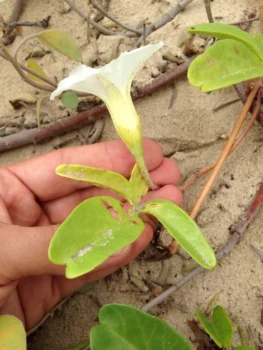
Beach Morning-Glory: A Coastal Beauty That Thrives Where Others Struggle
If you’ve ever strolled along a sandy beach at sunrise and spotted delicate purple trumpets unfurling among the dunes, you’ve likely encountered beach morning-glory (Ipomoea imperati). This remarkable coastal native has mastered the art of thriving in some of the harshest growing conditions imaginable – and it might just be the perfect addition to your seaside garden or challenging landscape spot.
What Is Beach Morning-Glory?
Beach morning-glory is a perennial flowering vine that belongs to the morning-glory family. As a forb herb, it lacks woody stems but makes up for it with incredible tenacity and spreading ability. This low-growing ground cover creates dense mats of heart-shaped leaves punctuated by stunning funnel-shaped flowers that typically bloom in shades of purple, pink, or white.
You might also encounter this plant listed under its synonym Ipomoea stolonifera in older gardening references, but don’t let the name confusion fool you – it’s the same salt-loving champion.
Where Beach Morning-Glory Calls Home
This coastal specialist is native throughout much of the southeastern United States, including Alabama, Florida, Georgia, Louisiana, Mississippi, North Carolina, South Carolina, and Texas. It also naturally occurs in Puerto Rico and the U.S. Virgin Islands. Interestingly, while it grows in Hawaii, it’s considered non-native there, having been introduced and now reproducing on its own in the wild.
- Species observed
- No observations
Why Consider Beach Morning-Glory for Your Garden?
Beach morning-glory earns its place in coastal gardens for several compelling reasons:
- Extreme salt tolerance: This plant laughs in the face of salt spray that would wither most other species
- Erosion control: Its extensive root system and spreading habit make it excellent for stabilizing sandy soils
- Low maintenance: Once established, it requires minimal care and thrives on neglect
- Pollinator magnet: The nectar-rich flowers attract bees, butterflies, and other beneficial insects
- Extended bloom time: Flowers appear throughout the growing season, providing consistent color
The Perfect Coastal Ground Cover
In garden design, beach morning-glory shines as a naturalistic ground cover for coastal and seaside landscapes. Its trailing growth habit makes it ideal for:
- Dune restoration and stabilization projects
- Informal coastal gardens where a wild, natural look is desired
- Xeriscapes and drought-tolerant plantings
- Areas where traditional lawn grass struggles due to salt exposure
The plant typically stays relatively low to the ground, spreading horizontally rather than climbing vertically, making it perfect for covering large areas without overwhelming nearby plants.
Growing Conditions and Care
Beach morning-glory is happiest in USDA hardiness zones 8-11, where it can grow as a true perennial. In these zones, it thrives in:
- Soil: Sandy, well-draining soils (though it’s surprisingly adaptable)
- Sun exposure: Full sun for best flowering
- Water: Drought tolerant once established, but benefits from occasional watering during extended dry spells
- Salt exposure: Thrives in coastal conditions with regular salt spray
According to wetland classifications, this species is generally considered Facultative Upland in most regions, meaning it usually grows in non-wetland areas but can tolerate some moisture.
Planting and Maintenance Tips
Getting beach morning-glory established is refreshingly straightforward:
- Timing: Plant in spring after the last frost
- Spacing: Give plants room to spread – they’ll fill in gaps quickly
- Watering: Water regularly until established, then reduce frequency
- Fertilizing: Generally unnecessary in most soils
- Pruning: Minimal pruning needed, but you can trim back overgrown areas
A Word of Caution
While beach morning-glory is a fantastic choice for appropriate locations, keep in mind that it spreads readily through runners and can cover large areas quickly. This makes it excellent for erosion control but means you might need to manage its growth if you want to keep it contained. In areas where it’s native, this spreading habit is part of its natural ecological role, but consider your space and neighboring plants when deciding where to place it.
Is Beach Morning-Glory Right for Your Garden?
Beach morning-glory is an excellent choice if you’re gardening in coastal areas within its native range and need a tough, attractive ground cover that can handle challenging conditions. Its combination of beautiful flowers, wildlife benefits, and practical erosion-control properties make it a valuable addition to seaside landscapes.
However, if you’re gardening outside its native range, consider exploring native alternatives that might provide similar benefits while supporting local ecosystems. Your local native plant society or extension office can suggest region-appropriate alternatives that offer comparable coastal gardening solutions.
For coastal gardeners within its native range, beach morning-glory offers a perfect blend of beauty, functionality, and ecological benefit – proving that sometimes the best garden plants are the ones that have been thriving in your area for centuries.