Beach Naupaka: The Half-Flower Wonder for Coastal Gardens
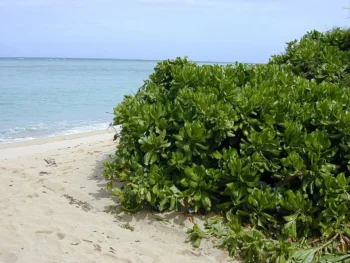
If you’ve ever strolled along a tropical beach and noticed shrubs with peculiar half-flowers that look like someone took scissors to them, you’ve likely encountered beach naupaka (Scaevola sericea). This fascinating coastal native, also known as naupaka kahakai in Hawaiian, brings both mystery and practicality to seaside landscapes.
What Makes Beach Naupaka Special?
Beach naupaka is a perennial shrub that typically grows 6-10 feet tall and wide, creating dense, rounded masses of thick, succulent-like foliage. But it’s the flowers that really steal the show – each white bloom appears to be missing half its petals, creating a unique fan-shaped appearance that’s unlike anything else in the plant kingdom.
The shrub maintains its green, coarse-textured foliage year-round, with white flowers appearing throughout the year in favorable conditions. While the small white fruits aren’t particularly showy, they add subtle interest to the plant’s overall appearance.
Where Beach Naupaka Calls Home
This remarkable shrub is native to coastal areas across the Pacific Basin, Hawaii, and parts of the southeastern United States, particularly Florida. You’ll find it naturally growing along beaches, coastal dunes, and salt-spray zones where few other plants can survive.
- Species observed
- No observations
Why Your Coastal Garden Needs Beach Naupaka
If you’re gardening in a coastal environment, beach naupaka might just become your new best friend. Here’s why:
- Salt tolerance superstar: This plant laughs in the face of salt spray and saline conditions
- Drought champion: Once established, it requires minimal water
- Erosion fighter: Its extensive root system helps stabilize sandy soils
- Low maintenance: Requires very little care once settled in
- Wind resistant: Perfect for creating windbreaks in exposed coastal areas
- Pollinator friendly: Attracts bees and other beneficial insects
Perfect Spots for Planting
Beach naupaka shines in:
- Coastal landscapes and beachfront properties
- Salt-tolerant garden designs
- Xerophytic (dry) landscaping
- Informal hedging and screening
- Erosion control on slopes and dunes
- Tropical and subtropical garden themes
Growing Conditions That Make Beach Naupaka Happy
This adaptable shrub is surprisingly easy-going about its growing conditions:
Climate: Thrives in USDA hardiness zones 9-11, requiring frost-free conditions year-round
Soil: Adapts to coarse, medium, or fine-textured soils. The key is good drainage – it won’t tolerate waterlogged conditions
Sun: Prefers full sun but can handle some shade
Water: Low water needs once established, though it can handle occasional flooding
pH: Tolerates a wide range from 5.5 to 8.0
Planting and Care Tips
Getting Started:
- Plant from containers, bare root, or grow from cuttings
- Seeds are also viable – expect about 6,540 seeds per pound
- Space plants 4-6 feet apart for screening, or give single specimens 8-10 feet of room
Ongoing Care:
- Water regularly during the first year to establish roots
- Once established, water only during extended dry periods
- Fertilize lightly – this plant doesn’t need much nutrition
- Prune as needed to maintain shape, though it naturally forms an attractive rounded form
- No major pest or disease issues to worry about
A Note About Wetlands
Beach naupaka has a Facultative Upland wetland status, meaning it usually grows in non-wetland areas but can occasionally pop up in wetland margins. This flexibility makes it even more valuable for coastal restoration projects.
The Bottom Line
If you’re gardening in zones 9-11 and dealing with coastal conditions, beach naupaka deserves serious consideration. Its unique flowers, bulletproof nature, and ecological benefits make it a standout choice for challenging seaside environments. Plus, there’s something deeply satisfying about growing a plant that thrives exactly where others fear to tread.
Just remember – this is a plant for warm, coastal climates. If you’re inland or in cooler zones, you’ll want to look for other native alternatives better suited to your specific conditions. But for coastal gardeners in the right zones, beach naupaka offers the perfect combination of beauty, toughness, and ecological value.