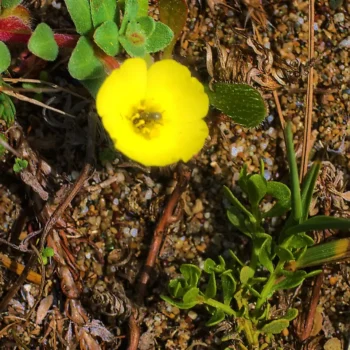
Beach Suncup: A Coastal Native That Brings Sunshine to Sandy Gardens
If you’re looking for a cheerful, low-maintenance ground cover that thrives in challenging coastal conditions, meet the beach suncup (Camissonia cheiranthifolia). This delightful native perennial might just be the golden solution your sandy garden has been waiting for!
What Makes Beach Suncup Special
Beach suncup is a charming herbaceous perennial that belongs to the evening primrose family. Don’t let its delicate appearance fool you – this little powerhouse is built to handle the tough conditions that coastal gardens often present. As a forb (a fancy botanical term for a non-woody flowering plant), it spreads low to the ground, creating attractive mats of vegetation topped with bright yellow blooms.
A True West Coast Native
Beach suncup is proudly native to the lower 48 states, specifically calling the coastal regions of California and Oregon home. You’ll find it naturally growing along sandy beaches, coastal dunes, and other sandy areas where few other plants dare to venture.
- Species observed
- No observations
Garden Appeal and Landscape Role
What makes beach suncup a garden gem? Here’s what this sunny native brings to the table:
- Bright yellow, four-petaled flowers that bloom from spring through summer
- Low-growing, mat-forming habit perfect for ground cover
- Excellent for erosion control on slopes and sandy areas
- Drought-tolerant once established
- Attracts native bees and other beneficial pollinators
Perfect Garden Settings
Beach suncup shines brightest in:
- Coastal gardens where salt spray and sandy soil are challenges
- Xeriscaping projects focused on water conservation
- Rock gardens and Mediterranean-style landscapes
- Native plant gardens celebrating local flora
- Areas needing erosion control with natural beauty
Growing Conditions and Care
Beach suncup is refreshingly easy to please. This hardy native thrives in USDA zones 9-10 and prefers:
- Sunlight: Full sun exposure
- Soil: Well-draining, sandy soil (clay soil is not its friend)
- Water: Minimal once established – perfect for water-wise gardening
- Maintenance: Low to no maintenance required
Planting and Care Tips
Getting beach suncup established is straightforward:
- Plant in spring for best establishment
- Ensure excellent drainage – soggy soil will spell trouble
- Water regularly during the first growing season, then reduce significantly
- Allow it to spread naturally to form attractive ground-covering colonies
- No fertilizer needed – this native prefers lean conditions
Wildlife and Pollinator Benefits
Beach suncup isn’t just pretty – it’s also ecologically valuable. The bright yellow flowers attract native bees and other small pollinators, making it a wonderful addition to pollinator-friendly gardens. By choosing this native plant, you’re supporting local ecosystems and providing food sources for beneficial insects.
Should You Plant Beach Suncup?
If you live in coastal California or Oregon and have sandy, well-draining soil, beach suncup could be your new best friend. It’s particularly valuable if you’re dealing with challenging growing conditions like salt spray, poor soil, or water restrictions. However, if you’re gardening outside its natural range or in heavy clay soil, you might want to consider other native alternatives better suited to your specific conditions.
Beach suncup proves that sometimes the best garden solutions come from looking to what nature already grows nearby. This sunny native offers beauty, ecological benefits, and easy care – a winning combination for any coastal gardener ready to embrace the natural charm of their region.