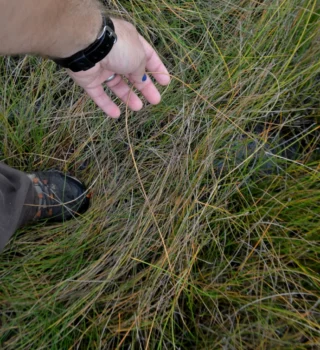
Beaked Spikerush: A Humble Native Sedge for Wetland Gardens
If you’re looking to create a native wetland garden or restore a soggy corner of your property, beaked spikerush (Eleocharis rostellata) might be just the unassuming little plant you need. Don’t let its modest appearance fool you – this native sedge plays an important role in North American wetland ecosystems and can be a valuable addition to the right garden setting.
What is Beaked Spikerush?
Beaked spikerush is a perennial sedge that belongs to the grass-like family of plants. Despite its common name suggesting it’s a rush, it’s actually a member of the sedge family (Cyperaceae). This rhizomatous plant spreads moderately through underground stems, forming colonies in wet areas where few other plants can thrive.
The plant gets its beaked name from the distinctive shape of its small seed heads, which have a pointed, beak-like appearance. Growing up to 3 feet tall, beaked spikerush has thin, erect stems with inconspicuous green flowers that bloom from late spring through summer, followed by small brown seeds in summer and fall.
Native Status and Distribution
Beaked spikerush is a true North American native, naturally occurring across an impressively wide range that includes Canada, the lower 48 United States, and Puerto Rico. You can find this adaptable sedge growing in states from coast to coast, including Alabama, Arizona, California, Florida, Maine, Texas, Washington, and everywhere in between.
- Species observed
- No observations
Important Rarity Considerations
Before you plant: While beaked spikerush has a wide distribution, it’s considered rare in some areas. In Alabama, for example, it has a rarity status of S1, meaning it’s critically imperiled in that state. If you live in an area where this species is rare, only plant it if you can source it responsibly from reputable native plant suppliers – never collect from wild populations.
Why Grow Beaked Spikerush?
This isn’t a plant you’d choose for flashy flowers or dramatic foliage, but beaked spikerush has some compelling qualities for the right garden:
- Wetland restoration: Essential for restoring natural wetland habitats
- Erosion control: Helps stabilize soggy soils with its rhizomatous root system
- Low maintenance: Once established, requires minimal care
- Wildlife habitat: Provides cover and nesting material for wetland wildlife
- Water filtration: Helps filter pollutants from water runoff
Perfect Garden Settings
Beaked spikerush isn’t for your typical flower border – it’s a specialist that thrives in specific conditions:
- Rain gardens and bioswales
- Pond and stream margins
- Bog gardens
- Wetland restoration projects
- Areas with poor drainage or seasonal flooding
Growing Conditions
Here’s where beaked spikerush gets particular – it’s classified as an obligate wetland plant, meaning it almost always occurs in wetlands. This plant needs:
- Moisture: Consistently wet to saturated soils (high moisture use)
- Sun exposure: Full sun (shade intolerant)
- Soil pH: Tolerates a range from 6.0 to 8.0
- Soil texture: Adaptable to coarse, medium, or fine-textured soils
- Temperature: Hardy to at least -28°F
- Drought tolerance: None – this plant needs water!
Planting and Care Tips
Growing beaked spikerush successfully is all about getting the water conditions right:
- Propagation: Can be grown from seed, bare root plants, or sprigs
- Planting density: Space plants for 2,700 to 4,800 plants per acre in restoration settings
- Establishment: Plant in spring when soil is consistently moist
- Maintenance: Minimal once established – just ensure consistent moisture
- Growth rate: Moderate establishment with slow seed spread but moderate vegetative spread
Challenges and Considerations
Before adding beaked spikerush to your garden, consider these factors:
- Limited availability: Not commonly found in nurseries
- Specialized needs: Requires consistently wet conditions
- Modest appearance: Won’t provide showy blooms or dramatic foliage
- Rarity in some areas: Check local status before planting
The Bottom Line
Beaked spikerush isn’t for every garden, but if you have a wet area that needs native plants, or you’re working on wetland restoration, this humble sedge could be exactly what you need. Its ability to thrive where other plants struggle makes it invaluable for challenging wet sites, and its wide native range means it’s likely appropriate for gardens across much of North America.
Just remember to source your plants responsibly, especially if you live in an area where the species is rare. When grown in the right conditions, beaked spikerush will quietly do its job of stabilizing soil, filtering water, and providing habitat – proving that sometimes the most valuable garden plants are the ones that work behind the scenes.