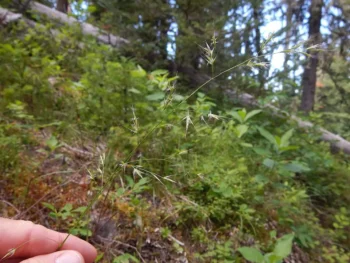
Bearded Fescue: A Delicate Native Grass for Western Gardens
If you’re looking for a fine-textured native grass that won’t take over your garden, bearded fescue (Festuca subulata) might just be your perfect match. This delicate perennial bunch grass brings a soft, almost ethereal quality to native plant gardens across western North America.
What Makes Bearded Fescue Special?
Don’t let the name fool you – bearded fescue isn’t actually bearded in the traditional sense. This charming grass gets its common name from its fine, hair-like leaves that create a soft, wispy appearance in the landscape. Growing to a modest 1.2 feet tall, it forms neat little clumps rather than spreading aggressively like some of its grass cousins.
Bearded fescue is a true native across an impressive range, naturally occurring in Alaska, western Canada, and throughout much of the western United States including California, Colorado, Idaho, Montana, Nevada, Oregon, South Dakota, Utah, Washington, and Wyoming. It’s also found in the Canadian provinces of Alberta and British Columbia.
- Species observed
- No observations
Why Grow Bearded Fescue?
This native grass offers several compelling reasons to include it in your landscape:
- Low maintenance: Once established, it’s relatively hands-off
- Native authenticity: Supports local ecosystems and provides habitat
- Fire tolerance: Highly tolerant of fire, making it suitable for fire-prone areas
- Erosion control: Excellent for stabilizing slopes and preventing soil erosion
- Wildlife value: Seeds provide food for birds and small mammals
- Compact size: Won’t overwhelm smaller garden spaces
Where Does Bearded Fescue Fit in Your Garden?
Bearded fescue shines in naturalistic plantings and restoration projects. It’s particularly well-suited for:
- Native plant gardens
- Mountain and alpine-style landscapes
- Erosion control on slopes
- Transitional areas between cultivated and wild spaces
- Mixed grass plantings
Its fine texture provides a lovely contrast to broader-leafed native plants and creates a naturalistic meadow feel. The modest yellow flowers appear in late spring, though they’re not particularly showy – this grass is more about subtle beauty than bold statements.
Growing Conditions and Care
Bearded fescue is surprisingly adaptable when it comes to soil types, thriving in coarse, medium, and fine-textured soils. However, it does have some specific preferences:
Soil and Drainage: While adaptable to various soil textures, good drainage is essential. It has low tolerance for waterlogged conditions and performs best in upland sites.
Water Needs: Here’s where this grass gets a bit demanding – it has high moisture requirements and low drought tolerance. Don’t expect it to thrive in true xeriscape conditions without supplemental watering.
Sun and Shade: Bearded fescue is notably shade tolerant, making it useful for partially shaded native gardens where many grasses struggle.
pH Requirements: Prefers slightly acidic to neutral soils with a pH between 5.8 and 7.4.
Climate: Hardy in USDA zones 3-7, this grass can handle temperatures as low as -38°F and needs at least 90 frost-free days.
Planting and Establishment
Growing bearded fescue from seed is your best bet, as it’s typically only available through specialized native plant contractors rather than general nurseries. With about 400,000 seeds per pound, a little goes a long way!
Keep these tips in mind for successful establishment:
- Plant in late fall or early spring for best results
- Provide consistent moisture during the establishment phase
- Be patient – this grass has a slow seed spread rate and moderate seedling vigor
- Expect moderate growth rates once established
- Plan for active growth periods in spring and summer
Maintenance and Long-term Care
Once established, bearded fescue is refreshingly low-maintenance. This long-lived perennial doesn’t require regular fertilization (medium fertility needs) and has no allelopathic properties, so it plays well with other plants.
The grass doesn’t retain its leaves year-round, and the foliage becomes quite porous in winter. Some gardeners appreciate this seasonal transparency, while others prefer evergreen options for year-round structure.
Is Bearded Fescue Right for Your Garden?
Bearded fescue works best for gardeners who appreciate subtle beauty and want to support native ecosystems. It’s ideal if you have:
- A partially shaded native garden
- Reliable water access for establishment and ongoing care
- Patience for moderate growth rates
- Interest in erosion control or restoration projects
However, it might not be the best choice if you’re looking for a drought-tolerant grass for truly dry conditions or need something with more visual impact throughout the year.
This delicate native grass may not be the showiest plant in your garden, but its quiet beauty and ecological value make it a worthy addition to western native landscapes. When grown in appropriate conditions, bearded fescue offers years of low-maintenance charm while supporting the birds and wildlife that call your garden home.