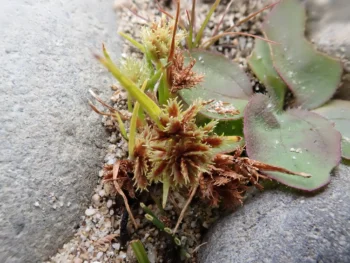
Bearded Flatsedge: A Native Wetland Wonder for Natural Gardens
If you’re looking to create a authentic wetland garden or restore a marshy area on your property, bearded flatsedge (Cyperus squarrosus) might just be the unsung hero you’ve been searching for. This humble native sedge may not win any beauty contests, but it plays a crucial ecological role in wet areas across North America.
What is Bearded Flatsedge?
Bearded flatsedge is an annual sedge that belongs to the grass-like plant family. Don’t let the name fool you – while it looks similar to grass, it’s actually part of the sedge family (Cyperaceae). The bearded part of its name comes from the distinctive bristly appearance of its seed heads, which give the plant a somewhat fuzzy, whisker-like look when mature.
This native North American species has quite the impressive resume when it comes to synonyms – botanists have shuffled it around under names like Cyperus aristatus and Cyperus inflexus over the years. But regardless of what you call it, this little sedge has been quietly doing its job in wetlands for centuries.
Where Does Bearded Flatsedge Call Home?
Talk about a well-traveled native! Bearded flatsedge is native to an enormous range that includes Canada, all of the lower 48 states, and even the U.S. Virgin Islands. You can find it growing naturally from Alberta and British Columbia all the way down to Florida and across to California. It’s also found in states as diverse as Maine, Texas, Montana, and Nevada – making it one of the most widely distributed native sedges in North America.
- Species observed
- No observations
The Wetland Specialist
Here’s where things get interesting: bearded flatsedge is what botanists call an obligate wetland plant in most regions. This means it almost always occurs in wetlands and rarely strays into drier areas. The only exception is in the Eastern Mountains and Piedmont region, where it’s classified as facultative wetland – meaning it usually prefers wet spots but can occasionally tolerate drier conditions.
This wetland preference makes bearded flatsedge incredibly valuable for:
- Rain gardens and bioswales
- Pond and stream margins
- Wetland restoration projects
- Natural water features
- Areas with seasonal flooding
Should You Grow Bearded Flatsedge?
The honest answer? It depends on what you’re trying to achieve. If you’re looking for showy flowers or dramatic foliage for your perennial border, this probably isn’t your plant. But if you’re working with wet areas and want to support native ecosystems, bearded flatsedge could be perfect.
Reasons to grow it:
- Excellent for wetland restoration and naturalized areas
- Provides habitat and food for wildlife in wet environments
- Extremely low maintenance once established
- Helps prevent erosion along water edges
- Self-seeds readily for natural colony expansion
Reasons to think twice:
- Not suitable for formal gardens or dry landscapes
- Limited ornamental value compared to showier natives
- Requires consistently wet conditions to thrive
- Annual lifecycle means it needs to reseed each year
Growing Bearded Flatsedge Successfully
The key to success with bearded flatsedge is simple: keep it wet! This plant has evolved to thrive in consistently moist to wet soils and will struggle in anything approaching dry conditions.
Ideal Growing Conditions:
- Soil: Consistently moist to wet, tolerates seasonal flooding
- Light: Full sun to partial shade
- Water: Constant moisture is essential
- Climate: Adaptable to a wide range of climates across North America
Planting and Care Tips
Since bearded flatsedge is an annual, you’ll either need to collect and sow seeds each year or allow the plant to self-seed naturally (which it does quite readily in suitable conditions). Here are some tips for success:
- Plant seeds in early spring in consistently moist soil
- No fertilization needed – this plant is adapted to nutrient-poor wetland soils
- Allow some plants to go to seed if you want natural reseeding
- Minimal maintenance required once established in proper conditions
- Works well in combination with other native wetland plants
The Bottom Line
Bearded flatsedge won’t win any garden beauty contests, but it’s a champion when it comes to supporting native wetland ecosystems. If you have wet areas on your property that you’d like to manage naturally, or if you’re involved in wetland restoration work, this humble sedge deserves serious consideration. Just remember: wet is the name of the game with this one!
For gardeners working with drier conditions, there are plenty of other native sedges and grasses that might be better suited to your landscape. But for those blessed (or cursed) with soggy spots, bearded flatsedge offers an authentic, low-maintenance solution that Mother Nature herself has been using for thousands of years.