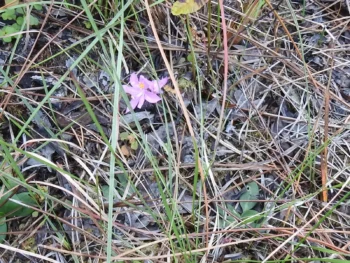
Bearded Grasspink: A Rare Native Orchid Worth Protecting
If you’ve ever stumbled upon a delicate pink orchid blooming in a southeastern wetland, you might have discovered one of nature’s hidden gems: the bearded grasspink (Calopogon barbatus). This enchanting native orchid is as elusive as it is beautiful, and there’s a very good reason why you won’t find it at your local garden center.
What Makes Bearded Grasspink Special?
The bearded grasspink is a perennial forb that belongs to our native orchid family. Unlike the showy tropical orchids you might see in florists, this little beauty is perfectly adapted to life in southeastern wetlands. Its delicate pink to purple flowers feature the characteristic bearded lip that gives it its common name, blooming on slender spikes that rise above grass-like foliage.
As a native species, bearded grasspink plays an important role in its ecosystem, though like many orchids, it maintains an air of mystery about its specific wildlife relationships.
Where Does Bearded Grasspink Call Home?
This southeastern native has quite a limited range, naturally occurring in Alabama, Florida, Georgia, Louisiana, Mississippi, North Carolina, and South Carolina. It’s particularly fond of wetland areas, where it typically grows in consistently moist to wet conditions.
- Species observed
- No observations
The Reality Check: Why You Shouldn’t Try to Grow It
Here’s where we need to have an honest conversation. While bearded grasspink is undeniably gorgeous, it’s also incredibly rare. In Alabama, it holds an S1 rarity status, meaning it’s critically imperiled. This isn’t a plant you want to attempt growing in your garden, and here’s why:
- It’s rare and declining: Every wild population is precious and needs protection
- Extremely difficult cultivation: Native orchids require specific soil fungi (mycorrhizae) to survive
- Specialized habitat needs: Requires wetland conditions that are hard to replicate
- Conservation concerns: Wild collection threatens remaining populations
Appreciating Bearded Grasspink Responsibly
The best way to enjoy bearded grasspink is to appreciate it in its natural habitat. If you’re lucky enough to encounter this rare beauty during a wetland hike, consider yourself privileged to witness one of the Southeast’s botanical treasures. Take photos, but leave only footprints.
Native Alternatives for Your Garden
If you’re drawn to the idea of native orchids in your landscape, consider these more garden-friendly alternatives:
- Wild bergamot (Monarda fistulosa) for purple blooms
- Swamp milkweed (Asclepias incarnata) for pink wetland flowers
- Native irises for similar wetland habitat and grass-like foliage
- Cardinal flower (Lobelia cardinalis) for dramatic wetland color
Supporting Conservation
Want to help bearded grasspink thrive? Support wetland conservation efforts in the Southeast, participate in native plant society activities, and spread awareness about the importance of protecting rare native orchids. Sometimes the most loving thing we can do for a plant is to admire it from afar and protect its wild home.
Remember, the rarest plants often teach us the most about restraint and conservation. Bearded grasspink reminds us that not every beautiful native plant belongs in our gardens – some are meant to remain wild and free, adding their quiet magic to the wetlands they call home.