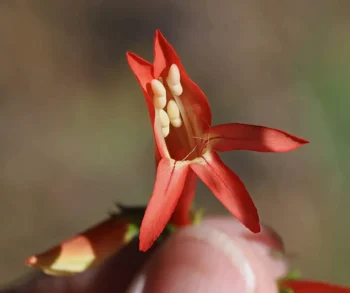
Beardlip Penstemon: A Native Showstopper for Water-Wise Gardens
If you’re looking for a native perennial that delivers stunning color while asking for practically nothing in return, let me introduce you to beardlip penstemon (Penstemon barbatus). This southwestern beauty has been quietly winning over gardeners with its towering spikes of brilliant red flowers and rock-solid reliability.
What Makes Beardlip Penstemon Special?
Beardlip penstemon is a true native gem, naturally occurring across Arizona, Colorado, Massachusetts, New Mexico, Texas, and Utah. As a perennial forb, this hardy plant comes back year after year, gradually forming attractive clumps that become more impressive with age.
- Species observed
- No observations
The real magic happens when those iconic flower spikes emerge in summer. Reaching heights of 2-4 feet, these dramatic stems are adorned with tubular scarlet-red blooms that seem to glow in the garden. The flowers continue their show well into fall, providing months of vibrant color when many other perennials are calling it quits.
Why Your Garden (and Local Wildlife) Will Love It
Here’s where beardlip penstemon really shines – it’s like a magnet for hummingbirds. Those perfectly shaped tubular flowers are practically designed for hummingbird beaks and tongues. But the party doesn’t stop there; bees and butterflies regularly visit the blooms too, making this plant a pollinator powerhouse.
From a design perspective, beardlip penstemon brings vertical drama to any planting. Use it as a backdrop for shorter perennials, scatter it through wildflower meadows, or let it naturalize in areas where you want a low-maintenance splash of color. It’s particularly stunning in:
- Native plant gardens
- Xeriscape and drought-tolerant landscapes
- Rock gardens
- Cottage-style gardens
- Pollinator and hummingbird gardens
Growing Beardlip Penstemon Successfully
One of the best things about beardlip penstemon is how easy it is to please. Hardy in USDA zones 4-8, this adaptable perennial thrives in full sun to partial shade conditions.
Soil Requirements: The key to success is well-draining soil. This plant absolutely cannot tolerate soggy conditions, especially in winter. It actually prefers slightly alkaline to neutral soil, making it perfect for areas where other perennials might struggle.
Watering Needs: Once established (usually by the second growing season), beardlip penstemon is remarkably drought tolerant. During the first year, provide regular water to help it establish a strong root system, then back off. Too much water can actually weaken the plant and make it more susceptible to problems.
Planting Tips: Spring is the ideal planting time. Space plants 12-18 inches apart to allow for proper air circulation. If you’re starting from seed, sow in fall for spring germination, as the seeds benefit from a cold treatment.
Care and Maintenance
Beardlip penstemon is refreshingly low-maintenance, but a few simple care tips will keep it looking its best:
- Deadhead spent flower spikes to encourage continued blooming
- Cut plants back in late fall or early spring
- Divide clumps every 3-4 years if they become overcrowded
- Avoid fertilizing – this plant prefers lean soil conditions
Is Beardlip Penstemon Right for Your Garden?
If you’re dealing with challenging conditions like poor drainage, heavy clay, or extremely wet areas, beardlip penstemon might not be your best choice. However, if you have well-draining soil and want a stunning native perennial that supports local wildlife while requiring minimal care, this plant is absolutely worth considering.
The combination of striking red flowers, hummingbird appeal, and drought tolerance makes beardlip penstemon an excellent choice for sustainable gardening. Plus, knowing you’re growing a plant that belongs in your local ecosystem adds an extra layer of satisfaction to every bloom.
Ready to add some native flair to your garden? Beardlip penstemon might just be the perfect plant to bridge the gap between low-maintenance gardening and high-impact beauty.