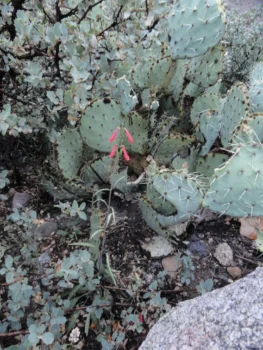
Beardtongue: A Native Perennial Powerhouse for Your Garden
If you’re looking to add some serious native plant power to your garden, let me introduce you to one of North America’s most underappreciated perennial superstars: beardtongue, scientifically known as Penstemon. This hardy forb herb might not have the flashiest name, but don’t let that fool you – it’s a gardening gem that deserves a spot in more landscapes.
What Exactly Is Beardtongue?
Beardtongue is a perennial forb herb, which basically means it’s a non-woody plant that comes back year after year. Unlike shrubs or trees, it doesn’t develop significant woody tissue above ground, instead sending up fresh stems each growing season from its perennating buds located at or below the soil surface.
Where Does Beardtongue Call Home?
Talk about a true North American native! Beardtongue has one of the most impressive native ranges you’ll find, spanning from Alaska down through the lower 48 states. This hardy genus has adapted to an enormous variety of climates and conditions across the continent.
You can find beardtongue growing naturally in an impressive list of locations, including Alberta, Alabama, British Columbia, Alaska, Manitoba, New Brunswick, Arizona, Arkansas, California, Nova Scotia, Ontario, Colorado, Connecticut, Quebec, Delaware, Saskatchewan, District of Columbia, Yukon, Florida, Northwest Territories, Georgia, Idaho, Illinois, Indiana, Iowa, Kansas, Kentucky, Louisiana, Maine, Maryland, Massachusetts, Michigan, Minnesota, Mississippi, Missouri, Montana, Nebraska, Nevada, New Hampshire, New Jersey, New Mexico, New York, North Carolina, North Dakota, Ohio, Oklahoma, Oregon, Pennsylvania, Rhode Island, South Carolina, South Dakota, Tennessee, Texas, Utah, Vermont, Virginia, Washington, West Virginia, Wisconsin, and Wyoming.
- Species observed
- No observations
Why Should You Consider Planting Beardtongue?
Here’s where beardtongue really shines as a garden choice:
- True native credentials: With such an extensive native range, you’re almost guaranteed to be planting something that naturally belongs in your local ecosystem
- Low-maintenance perennial: Once established, these plants are typically quite resilient and come back year after year
- Wildlife support: While not a major food source, beardtongue does provide some nutritional value to various wildlife species
- Ecological authenticity: By choosing native plants like beardtongue, you’re supporting local biodiversity and natural plant communities
Wildlife and Pollinator Benefits
While beardtongue isn’t the most heavily utilized wildlife plant, it does play a supporting role in the ecosystem. According to wildlife research, it provides a modest 2-5% of the diet for large animals and terrestrial birds, while small mammals rely on it for about 5-10% of their nutrition. Though animals use it only sparsely for cover, every bit helps in creating a complete habitat.
The real wildlife value often comes from the flowers, which typically attract various pollinators, though specific pollinator relationships can vary significantly among the many species within this diverse genus.
Garden Design and Landscape Role
Beardtongue works beautifully in several garden settings:
- Native plant gardens: A natural choice for authentic regional landscaping
- Prairie and meadow plantings: Fits right into naturalistic grassland designs
- Perennial borders: Adds native authenticity to traditional flower borders
- Rock gardens: Many species adapt well to well-drained, rocky conditions
- Wildlife gardens: Contributes to the overall ecosystem value of your landscape
Growing Beardtongue Successfully
The beauty of working with such a widespread native genus is that there’s likely a beardtongue species perfectly adapted to your local conditions. However, since growing requirements can vary significantly among species, your best bet is to:
- Research which specific beardtongue species are native to your exact region
- Choose species that match your garden’s existing soil and moisture conditions
- Look for plants from reputable native plant sources
- Plant in spring or fall for best establishment
- Be patient – many native perennials take time to establish but reward you with years of low-maintenance beauty
The Bottom Line
Beardtongue represents everything great about native plant gardening: authentic regional character, ecological value, and typically reliable performance once established. While it might not be the showiest plant in your garden, it’s the kind of steady, valuable addition that forms the backbone of truly sustainable landscaping.
With its extensive native range across North America, chances are excellent that there’s a beardtongue species that’s perfectly suited to your local conditions. It’s definitely worth exploring what specific species grow naturally in your area – you might just discover your new favorite native perennial!