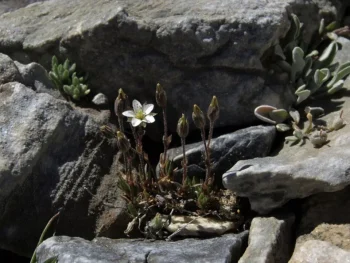
Beautiful Sandwort: A Delicate Alpine Native for Rock Gardens
If you’ve ever dreamed of bringing a touch of alpine magic to your garden, beautiful sandwort (Minuartia rubella) might just be the petite powerhouse you’ve been searching for. This charming native wildflower may be small in stature, but it packs a big punch when it comes to creating stunning ground cover displays in challenging growing conditions.
What Is Beautiful Sandwort?
Beautiful sandwort is a low-growing forb that belongs to the carnation family. Don’t let its delicate appearance fool you – this hardy little plant is built to survive in some of North America’s most demanding environments. As a vascular plant without woody tissue, it forms attractive cushions or mats close to the ground, making it perfect for gardeners who love plants with character and resilience.
This species can behave as either an annual or perennial depending on growing conditions, though it typically acts as a short-lived perennial in garden settings. You might also encounter it under several botanical aliases, including Arenaria rubella or Tryphane rubella, thanks to the ever-evolving world of plant taxonomy.
Where Beautiful Sandwort Calls Home
Beautiful sandwort is a true North American native with an impressively broad range. You’ll find this hardy little plant naturally occurring across Alaska, Canada (including Greenland), and scattered throughout the western United States. Its natural habitat spans from Alberta and British Columbia down through states like Colorado, Montana, Wyoming, and even reaches into Arizona and New Mexico at higher elevations.
The plant thrives in the challenging conditions of arctic tundra and alpine environments, from sea level in northern regions to high mountain peaks in the south.
- Species observed
- No observations
Why Grow Beautiful Sandwort?
There are several compelling reasons to consider adding beautiful sandwort to your garden palette:
- Native plant benefits: Supporting local ecosystems while reducing maintenance needs
- Extreme hardiness: Thrives in USDA zones 2-6, perfect for cold-climate gardeners
- Low maintenance: Once established, requires minimal care and watering
- Unique aesthetic: Delicate white flowers and fine foliage create textural interest
- Pollinator support: Small flowers attract beneficial insects like native bees and flies
- Problem-solving plant: Excellent for difficult spots with poor soil or drainage issues
Perfect Garden Situations
Beautiful sandwort isn’t your typical border perennial – it has very specific preferences that make it ideal for certain garden styles:
- Rock gardens: Naturally at home nestled between stones and boulders
- Alpine gardens: Perfect companion for other high-elevation natives
- Xeriscapes: Excellent drought tolerance once established
- Naturalized areas: Great for wildflower meadows in appropriate climates
- Green roofs: Shallow root system works well in extensive green roof systems
Growing Conditions and Care
Success with beautiful sandwort comes down to mimicking its natural mountain habitat. Here’s what this alpine native needs to thrive:
Soil Requirements: The number one rule for beautiful sandwort is drainage, drainage, drainage! This plant abhors wet feet and will quickly succumb to root rot in heavy, moisture-retentive soils. Sandy, rocky, or gravelly soils with excellent drainage are essential. pH isn’t particularly critical, but slightly alkaline conditions often work best.
Light Needs: Full sun is preferred, though it can tolerate some light shade in hotter climates. In its native habitat, it often grows in areas with intense UV exposure, so don’t worry about providing too much sun.
Water Requirements: The wetland status varies by region, but generally, beautiful sandwort prefers drier conditions once established. In most areas, it’s classified as facultative upland, meaning it usually occurs in non-wetland areas. Water regularly the first season to establish roots, then reduce watering significantly.
Temperature Tolerance: This plant laughs in the face of cold weather. Hardy in zones 2-6, it can handle extreme temperature swings and is perfectly at home in areas with harsh winters and cool summers.
Planting and Establishment Tips
Getting beautiful sandwort off to a good start requires attention to timing and technique:
- Best planting time: Early spring or fall in most climates
- Soil preparation: Amend heavy soils with coarse sand, perlite, or fine gravel
- Spacing: Plant 6-12 inches apart for ground cover effect
- Watering schedule: Water regularly the first season, then reduce to occasional deep watering
- Fertilization: Generally unnecessary – too much nutrition can make plants soft and prone to problems
- Mulching: Use gravel or stone mulch rather than organic materials
Potential Challenges
While beautiful sandwort is generally problem-free, there are a few things to watch for:
Overwatering: The biggest killer of this plant is too much moisture. When in doubt, err on the dry side.
Heavy soils: Clay or poorly draining soils are almost guaranteed to cause problems. Significant soil amendment or raised beds may be necessary.
Hot, humid climates: This plant prefers cool, dry conditions and may struggle in hot, humid summers outside its natural range.
The Bottom Line
Beautiful sandwort is a specialized plant that rewards gardeners who can provide the right conditions. If you have well-draining soil, live in a cooler climate, and appreciate subtle beauty over flashy displays, this native gem could be perfect for your garden. It’s particularly valuable for gardeners in northern regions or high-elevation areas where many plants struggle to survive.
While it may not be the right choice for every garden or every gardener, beautiful sandwort offers a unique opportunity to grow a truly wild piece of North America’s alpine heritage. For rock garden enthusiasts and native plant lovers, it’s definitely worth seeking out from specialty nurseries that focus on alpine or native plants.