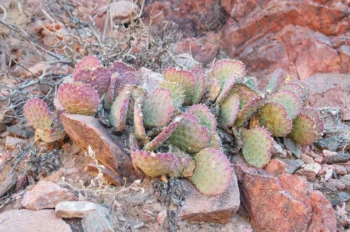
Beavertail Pricklypear: A Native Arizona Cactus Worth Considering
If you’re looking to add some authentic Southwestern flair to your garden, the beavertail pricklypear (Opuntia basilaris var. longiareolata) might just be the native plant you’ve been searching for. This distinctive cactus variety brings a piece of Arizona’s natural landscape right to your backyard, though finding specific growing information can be as challenging as navigating a desert without a map!
What Makes This Plant Special
The beavertail pricklypear is a perennial shrub that’s as tough as the Arizona landscape it calls home. This native variety belongs to the prickly pear cactus family and has earned its place as a legitimate piece of American botanical heritage. You might also see it listed under its synonym, Opuntia longiareolata Clover & Jotter, in some plant databases.
Where You’ll Find It Growing Wild
This particular variety of beavertail pricklypear is native to Arizona, making it a true Southwestern specialist. It’s perfectly adapted to the unique conditions of the Sonoran Desert region and represents an authentic piece of the state’s natural flora.
- Species observed
- No observations
Why Consider Planting It
Here are some compelling reasons to add this native cactus to your landscape:
- It’s a true Arizona native, supporting local ecosystems
- Once established, it requires minimal water and maintenance
- Adds authentic desert character to xeriscaping projects
- Represents a piece of living Southwestern history in your garden
The Growing Challenge
Here’s where things get a bit tricky – specific growing information for Opuntia basilaris var. longiareolata is surprisingly scarce. This variety seems to be one of those plants that botanists know exists but gardeners haven’t widely cultivated. Most available information focuses on the broader beavertail pricklypear species rather than this specific Arizona variety.
Conservation Considerations
This variety has a Global Conservation Status of S5T2Q, which is classified as undefined – essentially meaning its conservation status needs more research. While this doesn’t necessarily mean it’s rare or endangered, it does suggest that more study is needed to understand its population status.
Is This Plant Right for Your Garden?
The beavertail pricklypear could be perfect for your landscape if you:
- Live in Arizona or similar desert climates
- Want to create an authentic native plant garden
- Prefer low-maintenance, drought-tolerant plants
- Enjoy the unique architectural form of cacti
However, you might want to look elsewhere if you need detailed growing guides or prefer plants with well-documented cultivation requirements.
The Bottom Line
The beavertail pricklypear (Opuntia basilaris var. longiareolata) represents an intriguing piece of Arizona’s native flora that could add authentic desert appeal to the right garden. While specific growing information is limited, its native status makes it worth considering for Southwestern landscapes. If you’re determined to grow this particular variety, you might need to become something of a plant pioneer, learning its needs through careful observation and experimentation.
For gardeners seeking well-documented native alternatives, consider researching other Arizona native cacti and succulents that might offer similar aesthetic appeal with more readily available growing information.