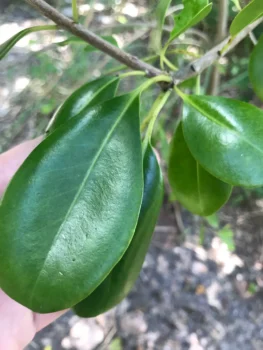
Beeftree: A Resilient Native Shrub for Warm Climate Gardens
If you’re looking for a tough, low-maintenance native shrub that can handle challenging growing conditions, let me introduce you to the beeftree (Guapira discolor). This unassuming but reliable plant might not win any beauty contests, but it’s got character and plenty of practical benefits for the right garden setting.
What Exactly Is Beeftree?
Beeftree, scientifically known as Guapira discolor, is a perennial shrub that’s truly American-made. This multi-stemmed woody plant typically grows to about 13-16 feet tall, though it can sometimes stretch taller or stay more compact depending on growing conditions. You might also encounter it under several other botanical names in older references, including Pisonia discolor or Torrubia discolor – botanists love to shuffle names around!
Where Does Beeftree Call Home?
This native beauty has quite a specific address. You’ll find beeftree naturally growing in Florida, Puerto Rico, and Navassa Island. It’s perfectly adapted to life in warm, tropical and subtropical climates where many other plants struggle to thrive.
- Species observed
- No observations
Why Consider Beeftree for Your Garden?
Here’s where beeftree really shines – it’s incredibly adaptable to different moisture conditions. Depending on where you live, this plant can handle both wetland edges and upland areas. In the Atlantic and Gulf Coastal Plain, it’s considered facultative, meaning it’s equally happy in wet or dry spots. In the Caribbean, it prefers staying on the drier side as an obligate upland species.
The aesthetic appeal might be subtle, but beeftree offers:
- Glossy, leathery foliage that stays attractive year-round
- Small, understated flowers that don’t demand attention but add quiet interest
- A naturally shrubby form that works well for screening or backdrop plantings
- Excellent drought tolerance once established
Perfect Garden Settings for Beeftree
Beeftree isn’t the star of formal flower gardens, but it’s absolutely perfect for:
- Native plant gardens where authenticity matters
- Coastal landscapes where salt tolerance is crucial
- Naturalistic settings that mimic wild habitats
- Low-maintenance landscapes where you want reliable performance
- Mixed shrub borders where it can provide structure and backdrop
Growing Conditions and Care
The good news? Beeftree isn’t particularly fussy. While specific growing requirements aren’t well-documented, its natural habitat gives us plenty of clues about what makes it happy.
Climate: This is definitely a warm-weather plant. You’ll want to be in USDA hardiness zones 9b through 11 to grow beeftree successfully.
Soil and Water: Given its flexible wetland status, beeftree can adapt to various moisture levels. Well-draining soil is probably your safest bet, but don’t stress if your site gets occasionally soggy or tends toward the dry side.
Maintenance: Once established, beeftree should be relatively low-maintenance. Like most native plants, it’s adapted to local conditions and shouldn’t need constant babying.
The Bottom Line
Beeftree might not be the flashiest addition to your plant palette, but it brings serious value as a native species that supports local ecosystems. If you’re gardening in its natural range and want a reliable, low-fuss shrub that knows how to handle whatever weather throws at it, beeftree deserves consideration.
Just remember – this isn’t a plant for cold climates or formal gardens where every leaf needs to be picture-perfect. But for naturalistic landscapes in warm regions, especially coastal areas, beeftree could be exactly what you’ve been looking for.