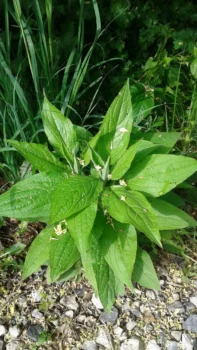
Beggarslice: A Charming Native Wildflower That’s Stickier Than It Sounds
If you’ve ever taken a hike through eastern woodlands and found mysterious burrs clinging to your socks, you’ve likely met beggarslice (Hackelia virginiana). Don’t let the somewhat unflattering common name fool you – this native wildflower deserves a spot in your naturalized garden, especially if you’re looking to support local wildlife and create authentic woodland landscapes.
What Exactly Is Beggarslice?
Beggarslice is a native North American forb – essentially a non-woody flowering plant that lacks the thick stems of shrubs and trees. This biennial or perennial member of the borage family produces small, delicate blue to white flowers that eventually develop into the plant’s signature feature: small, burr-like fruits covered in tiny hooked bristles. These beggar’s purses are nature’s velcro, designed to hitchhike on passing animals (and hikers!) to spread the plant’s seeds far and wide.
Where You’ll Find Beggarslice Growing Wild
This adaptable native has quite an impressive range across North America. You’ll find beggarslice growing naturally throughout most of the eastern and central United States, from Maine down to Georgia and Louisiana, and west to the Great Plains. It also extends into southeastern Canada, including Ontario and Quebec. The plant thrives in a variety of habitats, from woodland edges to disturbed areas.
- Species observed
- No observations
Why Consider Beggarslice for Your Garden?
While beggarslice might not win any beauty contests compared to showier garden favorites, it offers several compelling reasons to include it in your landscape:
- True native credentials: Supporting local ecosystems by planting species that evolved in your region
- Wildlife magnet: The small flowers attract native bees, flies, and butterflies, while birds appreciate the seeds
- Low maintenance: Once established, it requires minimal care and can self-seed in suitable conditions
- Authentic woodland character: Perfect for creating natural-looking woodland gardens and native plant communities
- Adaptable nature: Tolerates a range of soil and moisture conditions
Growing Conditions and Care
Beggarslice is refreshingly easy to please, making it an excellent choice for beginning native plant gardeners:
Light requirements: Prefers partial shade to full shade, mimicking its natural woodland habitat
Soil needs: Adaptable to various soil types, from moist to moderately dry conditions. Based on its wetland status, it typically prefers non-wetland sites but can tolerate some moisture
Hardiness: Thrives in USDA zones 3-8, making it suitable for most temperate North American gardens
Water requirements: Once established, it’s quite drought-tolerant, though it appreciates consistent moisture during dry spells
Perfect Garden Situations
Beggarslice shines in specific garden settings where its natural character can be appreciated:
- Woodland gardens: Plant it among ferns, wild ginger, and other native woodland species
- Naturalized areas: Perfect for low-maintenance areas where you want authentic native plant communities
- Wildlife gardens: Include it in pollinator-friendly plantings alongside other native wildflowers
- Restoration projects: Excellent choice for rehabilitating disturbed woodland areas
Planting and Maintenance Tips
Getting beggarslice established is straightforward:
- Plant seeds in fall or early spring, or start with nursery plants if available
- Choose a location with partial shade and well-draining soil
- Water regularly during the first season to establish strong roots
- Once established, minimal intervention is needed
- Allow some plants to go to seed if you want natural spreading (just be prepared for those sticky burrs!)
- Deadhead spent flowers if you want to prevent aggressive self-seeding
A Few Words of Caution
While beggarslice is a well-behaved native plant, those burr-like seeds can be a minor nuisance if the plant is located too close to high-traffic areas. The hooked bristles are designed to stick to anything that passes by, so you might want to position it away from main walkways or areas where children and pets play frequently.
The Bottom Line
Beggarslice might not be the flashiest addition to your garden, but it’s a solid choice for gardeners who prioritize ecological value and authentic native landscapes. Its ability to support pollinators, adapt to various conditions, and require minimal care makes it a worthy consideration for woodland gardens and naturalized areas. Plus, there’s something satisfying about growing a plant that’s been part of North American ecosystems for thousands of years – sticky burrs and all!