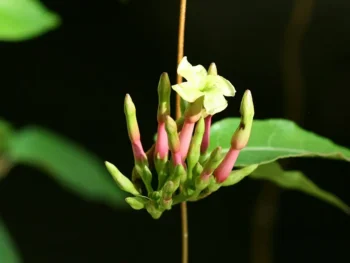
Bejuco (Mesechites): A Rare Climbing Vine from the Caribbean
If you’ve stumbled across the name bejuco or Mesechites in your plant research, you’ve discovered one of the more mysterious members of the native plant world. This perennial climbing vine has a story that’s as unique as its extremely limited range, and there’s a good chance you’ve never encountered it in any garden center – and there’s a very good reason for that!
What Exactly Is Bejuco?
Bejuco belongs to the genus Mesechites, a group of twining and climbing plants that can develop relatively long stems. These stems can be either woody or herbaceous, giving the plant a somewhat variable appearance depending on growing conditions and age. As a perennial, bejuco is designed to stick around for the long haul, though its extremely limited natural habitat makes it a true rarity in the plant world.
Where Does Bejuco Come From?
Here’s where things get really interesting (and a bit challenging for most gardeners): bejuco is native exclusively to Navassa Island. If you’re scratching your head wondering where that is, you’re not alone! Navassa Island is a small, uninhabited U.S. territory located in the Caribbean Sea between Haiti and Jamaica. This tiny 2-square-mile island is the entire known native range for this climbing vine.
- Species observed
- No observations
Should You Try to Grow Bejuco?
While the idea of growing such a rare and unique native plant might be appealing, there are several practical challenges to consider:
- Extremely limited availability: Given its restricted native range, bejuco is virtually impossible to find in commercial cultivation
- Unknown growing requirements: With so little documented information about its preferred conditions, successful cultivation would be largely experimental
- Conservation concerns: The plant’s limited range suggests it may be vulnerable, making responsible sourcing critical
Alternative Native Climbing Vines
If you’re drawn to the idea of native climbing vines, consider these more readily available alternatives that can provide similar garden functions:
- American Groundnut (Apios americana): A vigorous native climber with fragrant flowers
- Wild Ginger (Aristolochia serpentaria): An interesting native vine with unique flowers
- Virgin’s Bower (Clematis virginiana): A native clematis with showy seed heads
The Bottom Line on Bejuco
While bejuco represents a fascinating piece of Caribbean flora, it’s not a realistic option for most home gardeners. Its extremely limited native range, lack of commercial availability, and unknown cultivation requirements make it more of a botanical curiosity than a practical garden plant. If you’re passionate about native climbing vines, you’ll have much better success (and environmental impact) focusing on native species that are actually native to your region and readily available through responsible nurseries.
Sometimes the most interesting plants are the ones we can’t grow – they remind us of the incredible diversity of plant life and the importance of protecting unique ecosystems like Navassa Island, where rare species like bejuco continue to thrive in their natural habitat.