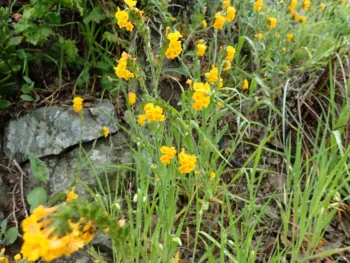
Bentflower Fiddleneck: A Rare California Native Worth Growing Responsibly
Meet the bentflower fiddleneck (Amsinckia lunaris), a charming little California native that’s both a gardener’s delight and a conservation concern. This annual wildflower might not win any beauty contests, but it packs a punch when it comes to supporting local wildlife and adding authentic California character to your garden.
What Makes Bentflower Fiddleneck Special?
Bentflower fiddleneck is a forb—basically a fancy term for a soft-stemmed flowering plant that dies back each year. What sets it apart from its fiddleneck cousins is its distinctive curved flower clusters that really do look like the head of a fiddle (hence the name!). The small, funnel-shaped flowers range from blue to purple and create a delicate, almost ethereal display in spring gardens.
Where Does It Call Home?
This little gem is exclusively Californian, making it a true Golden State native. You’ll find it naturally occurring primarily in California’s Central Valley and surrounding foothills, where it has adapted to the Mediterranean climate perfectly.
- Species observed
- No observations
A Word of Caution: Rarity Matters
Here’s where things get serious for a moment. Bentflower fiddleneck has a Global Conservation Status of S2?, which means its population status is poorly understood but potentially at risk. If you’re considering adding this beauty to your garden, please make sure you source seeds or plants from reputable native plant nurseries that practice ethical collection methods. Never collect from wild populations.
Why Your Garden (and Local Wildlife) Will Love It
Despite its modest appearance, bentflower fiddleneck is a pollinator magnet. Native bees absolutely adore it, and you’ll likely spot various beneficial insects visiting throughout its blooming period. It’s particularly valuable because it blooms early in the spring when other nectar sources might be scarce.
For gardeners, this annual offers several appealing qualities:
- Extremely drought tolerant once established
- Thrives in poor soils that challenge other plants
- Self-seeds readily for natural-looking drifts
- Requires minimal care and maintenance
- Authentic native plant for California gardens
Perfect Garden Situations
Bentflower fiddleneck isn’t meant for formal flower borders or manicured landscapes. Instead, it shines in:
- Native plant gardens and wildflower meadows
- Restoration and habitat gardens
- Low-water xeriscapes
- Naturalized areas where a wild look is desired
- Educational gardens showcasing California natives
Growing Conditions and Care
The good news? Bentflower fiddleneck is refreshingly easy to please. It thrives in USDA hardiness zones 8-10, which covers most of California’s inhabited areas. Here’s what it needs to flourish:
Sunlight: Full sun is preferred, though it can tolerate some light shade
Soil: Well-draining soil is essential. It actually prefers poor soils and can handle both sandy and clay conditions
Water: Drought tolerant once established. Water during germination and early growth, then let natural rainfall take over
Climate: Loves California’s Mediterranean climate with wet winters and dry summers
Planting and Care Tips
Since bentflower fiddleneck is an annual, you’ll be working with seeds rather than transplants in most cases. Here’s how to succeed:
- Direct sow seeds in fall (October-November) for spring blooms
- Scatter seeds on prepared soil surface—no need to bury deeply
- Water gently until germination occurs
- Thin seedlings if they’re overcrowded
- Allow some plants to go to seed for next year’s display
- Avoid fertilizing—rich soils can actually reduce flowering
The Bottom Line
Bentflower fiddleneck might not be the showiest plant in your garden, but it offers something increasingly precious: authentic California heritage and genuine ecological value. If you can source it responsibly, it makes a wonderful addition to native gardens where its modest charm and pollinator benefits can truly shine. Just remember—with great native plants comes great responsibility to protect wild populations!