Bicknell’s Sedge: A Quietly Beautiful Native Grass for Challenging Gardens
If you’re looking for a low-maintenance native plant that thrives where others struggle, Bicknell’s sedge (Carex bicknellii) might be your new best friend. This unassuming perennial grass offers subtle beauty and remarkable adaptability, making it a smart choice for gardeners who appreciate plants that work hard without demanding attention.
What is Bicknell’s Sedge?
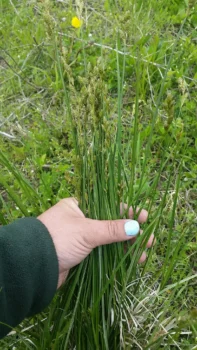
Bicknell’s sedge is a native North American perennial that belongs to the sedge family – those grass-like plants that are tougher than they look. While it may not win any flashy flower contests, this modest plant grows in neat clumps reaching about 3.4 feet tall with fine-textured green foliage that sways gracefully in the breeze.
Don’t expect showy blooms from this practical beauty. In late spring, Bicknell’s sedge produces small, inconspicuous green flowers that are more about function than form. The real appeal lies in its elegant, fountain-like growth habit and its ability to thrive in spots where other plants throw in the towel.
Where Does Bicknell’s Sedge Call Home?
This hardy sedge is native to both Canada and the lower 48 states, with a remarkably wide distribution spanning 27 states and provinces. You’ll find it naturally growing from Manitoba and Ontario down through the Great Plains and across much of the eastern United States, including Arkansas, Connecticut, Illinois, Kansas, Maine, Michigan, Minnesota, Missouri, New York, Ohio, Pennsylvania, Texas, and Wisconsin, among others.
- Species observed
- No observations
Important note: Bicknell’s sedge is considered rare in some areas, particularly in Arkansas (S1 status) and New Jersey (S2/Highlands Listed status). If you live in these regions and want to grow this plant, make sure to source it from reputable native plant nurseries that propagate their own stock rather than wild-collecting.
Why Choose Bicknell’s Sedge for Your Garden?
This sedge earns its place in the garden through sheer reliability rather than flashy good looks. Here’s why it might be perfect for your landscape:
- Incredibly adaptable: Thrives in various soil types from coarse to fine textures
- Drought tolerant: Once established, it handles dry conditions with medium drought tolerance
- Cold hardy: Survives temperatures as low as -38°F (likely hardy in USDA zones 3-8)
- Fire resistant: Has high fire tolerance, making it excellent for prairie restorations
- Low maintenance: Requires minimal fertility and has low moisture needs
- Versatile water tolerance: Can handle both wet and dry sites depending on your region
Perfect Garden Settings
Bicknell’s sedge shines in naturalized landscapes where its quiet charm can work its magic. Consider it for:
- Prairie and meadow gardens: Provides authentic texture in native grassland restorations
- Rain gardens: Its flexible water tolerance makes it reliable in areas with variable moisture
- Challenging sites: Excellent for slopes, poor soils, or areas too tough for fussier plants
- Low-maintenance borders: Creates subtle structure without constant care
- Woodland edges: Tolerates shade better than many grasses
Growing Conditions and Care
The beauty of Bicknell’s sedge lies in its easygoing nature. Here’s what it needs to thrive:
Soil: Adaptable to most soil types, but prefers slightly acidic conditions (pH 4.5-6.6). It’s not picky about texture and handles everything from sandy to clay soils.
Light: Shade tolerant, making it more flexible than many prairie grasses. It can handle full sun to partial shade.
Water: Low to moderate moisture needs. Its wetland status varies by region – it can handle both wet and dry conditions depending on your location.
Climate: Needs at least 85 frost-free days and can handle annual precipitation ranging from 14 to 55 inches.
Planting and Propagation
Getting Bicknell’s sedge established is straightforward, though patience is key. This plant is routinely available from native plant nurseries and can be propagated several ways:
- Seeds: Direct sow in fall or early spring (no cold stratification required)
- Bare root plants: Plant in spring after frost danger passes
- Sprigs: Small divisions can be planted for quicker establishment
Keep in mind that this sedge has a moderate growth rate and low seedling vigor, so don’t expect instant gratification. Plant 2,700-4,800 plants per acre for restoration projects, spacing them to allow for their eventual mature spread.
Wildlife and Ecological Benefits
While Bicknell’s sedge won’t attract crowds of butterflies like a coneflower might, it plays important ecological roles. As a wind-pollinated plant, it doesn’t offer nectar to pollinators, but it provides habitat structure and likely supports various insects and small wildlife as part of native plant communities.
Its clumping growth habit and fine texture make it valuable for erosion control and soil stabilization, particularly in restoration projects.
The Bottom Line
Bicknell’s sedge may not be the star of your garden show, but it’s the reliable supporting actor that makes everything else look good. If you’re creating a native landscape, restoring prairie habitat, or simply need a tough plant for challenging conditions, this adaptable sedge deserves serious consideration.
Just remember to source it responsibly, especially if you live in areas where it’s considered rare. Your local native plant society or extension office can point you toward reputable suppliers who propagate rather than wild-collect their plants.
Sometimes the most valuable plants are the ones that work quietly behind the scenes – and Bicknell’s sedge excels at exactly that kind of garden diplomacy.