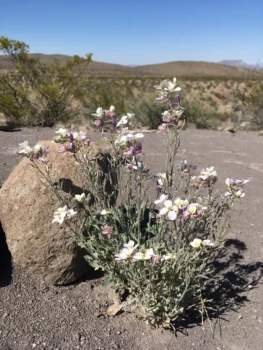
Bicolor Fanmustard: A Hidden Gem for Southwest Gardens
If you’re looking for a tough, drought-tolerant native plant that adds delicate beauty to your southwestern garden, let me introduce you to bicolor fanmustard (Nerisyrenia camporum). This unassuming little perennial might not have the flashiest name, but it’s got serious staying power and subtle charm that makes it perfect for water-wise landscapes.
What Makes Bicolor Fanmustard Special?
Bicolor fanmustard is a native perennial forb that belongs to the mustard family. As a true southwestern native, it’s perfectly adapted to the challenging conditions of New Mexico and Texas, where it naturally occurs. You might also see it listed under its scientific synonym, Greggia camporum, in some older gardening references.
This hardy little plant forms compact rosettes close to the ground and produces delicate flowers that showcase the bicolor part of its name – typically featuring white to pale purple petals that create a lovely two-toned effect. It’s the kind of plant that rewards close observation, offering subtle beauty rather than bold drama.
Where Does It Grow Naturally?
Bicolor fanmustard calls the American Southwest home, specifically thriving in New Mexico and Texas. In these regions, it’s adapted to rocky outcrops, desert flats, and areas with well-draining soils that would challenge many other plants.
- Species observed
- No observations
Why Plant Bicolor Fanmustard in Your Garden?
There are several compelling reasons to consider this native beauty for your landscape:
- Water-wise wonder: Once established, it requires minimal irrigation, making it perfect for xeriscaping
- Pollinator support: The small flowers attract native bees and other beneficial insects
- Low maintenance: This perennial comes back year after year with little fuss
- Native plant benefits: Supports local ecosystems and wildlife
- Unique texture: Adds interesting form and texture to rock gardens and desert landscapes
Perfect Garden Settings
Bicolor fanmustard shines in specific garden types where its natural characteristics can be appreciated:
- Rock gardens: Tucks beautifully between stones and boulders
- Xeriscape designs: Essential for water-conscious landscapes
- Native plant gardens: Pairs well with other southwestern natives
- Desert-themed landscapes: Provides delicate contrast to bolder desert plants
- Ground cover applications: Works well as a drought-tolerant alternative to traditional groundcovers
Growing Conditions and Care
Success with bicolor fanmustard comes down to mimicking its natural habitat:
Sunlight: Plant in full sun locations where it can soak up plenty of rays, just like in its native desert environment.
Soil requirements: Well-draining soil is absolutely critical. Sandy or rocky soils work best, and the plant will struggle in heavy clay or constantly moist conditions.
Hardiness zones: Thrives in USDA zones 7-10, making it suitable for most of the American Southwest and similar climates.
Water needs: While it appreciates some water during establishment, mature plants are quite drought tolerant and prefer infrequent, deep watering over constant moisture.
Planting and Care Tips
Getting bicolor fanmustard established successfully requires attention to a few key details:
- Soil preparation: Amend heavy soils with coarse sand or gravel to improve drainage
- Planting timing: Plant in fall or early spring when temperatures are moderate
- Spacing: Allow adequate space between plants for air circulation
- Mulching: Use gravel or decomposed granite mulch rather than organic mulches that retain moisture
- Watering: Water deeply but infrequently once established; overwatering is more harmful than underwatering
- Fertilizing: Generally unnecessary in native soils; avoid high-nitrogen fertilizers
Is Bicolor Fanmustard Right for Your Garden?
This native plant is an excellent choice if you’re gardening in the Southwest, want to reduce water usage, or are creating habitat for native pollinators. It’s particularly valuable for gardeners who appreciate subtle beauty and want plants that work with, rather than against, their local environment.
However, if you’re looking for bold, showy flowers or live in areas with high humidity and frequent rainfall, bicolor fanmustard might not be the best fit for your garden.
For southwestern gardeners seeking authentic native plants that support local ecosystems while requiring minimal resources, bicolor fanmustard offers a perfect combination of environmental benefits and understated charm. It’s proof that sometimes the most valuable garden plants are the quiet performers that steadily do their job year after year.