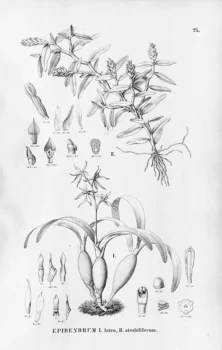
Big Cypress Star Orchid: Florida’s Hidden Native Gem
Meet the big cypress star orchid (Epidendrum strobiliferum), a charming native orchid that’s as unique as its name suggests. This little-known Florida native is a true treasure for gardeners who love to showcase indigenous plants in their landscapes. While it may not be the showiest orchid you’ll ever encounter, it has a subtle beauty and fascinating growth habit that makes it worth considering for the right garden setting.
What Makes This Orchid Special?
The big cypress star orchid is a perennial epiphytic orchid, meaning it grows on other plants (usually trees) rather than in soil. Don’t worry – it’s not a parasite! Like other epiphytes, it simply uses its host for support while gathering nutrients from the air, rain, and organic debris that collects around its roots.
This native beauty produces small, delicate flowers arranged in distinctive cone-like clusters that give the plant its strobiliferum name (which means cone-bearing). The flowers are typically white to greenish in color and, while subtle, have their own quiet charm that appeals to orchid enthusiasts and native plant lovers alike.
Where Does It Come From?
The big cypress star orchid is a true Florida native, found exclusively in South Florida. It’s particularly associated with the Big Cypress region and the greater Everglades ecosystem, where it grows naturally on trees in humid, subtropical conditions.
- Species observed
- No observations
Should You Grow It?
This orchid is perfect for gardeners who:
- Are passionate about native plants and want to support local ecosystems
- Enjoy the challenge of growing specialized plants
- Have experience with epiphytic orchids or are eager to learn
- Live in South Florida (USDA zones 10-11) where it can thrive outdoors year-round
- Want to attract native pollinators to their garden
However, this might not be the best choice if you’re looking for a low-maintenance plant or dramatic floral displays. The big cypress star orchid requires specific care and produces subtle rather than showy blooms.
Growing Conditions and Care
Successfully growing the big cypress star orchid requires mimicking its natural habitat:
Light Requirements
Provide bright, filtered light – think dappled sunlight through tree branches. Avoid direct, harsh sunlight which can damage the delicate foliage.
Humidity and Air Circulation
This orchid craves high humidity (60-80%) and excellent air circulation. If you’re growing it indoors, consider using a humidity tray or room humidifier, and ensure good ventilation.
Mounting and Support
Since it’s epiphytic, you’ll need to mount your big cypress star orchid on a tree, cork bark, or specialized orchid mount. Never plant it in regular potting soil – it needs its roots exposed to air.
Watering
Regular misting is key, but allow the plant to dry slightly between waterings. In its natural habitat, it gets moisture from rain and humid air rather than constant wetness.
Temperature
This warm-weather lover thrives in temperatures between 65-85°F and needs protection from any cold snaps. It’s hardy in USDA zones 10-11 only.
Landscape Role and Design Ideas
The big cypress star orchid works beautifully in:
- Native plant gardens that showcase Florida’s natural heritage
- Shade gardens with naturalistic plantings
- Mounted displays on outdoor patios or in screened enclosures
- Collections focused on native orchids and epiphytes
Consider pairing it with other native epiphytes like bromeliads or mounting it on native trees such as live oak or bald cypress for an authentic ecosystem feel.
Supporting Native Ecosystems
By choosing to grow native plants like the big cypress star orchid, you’re supporting local wildlife and helping preserve Florida’s unique botanical heritage. While this orchid’s specific pollinator relationships aren’t well-documented, native orchids typically support native insects and contribute to the overall health of local ecosystems.
The Bottom Line
The big cypress star orchid isn’t for everyone, but for the right gardener, it’s a genuine treasure. If you’re passionate about native plants, enjoy growing epiphytes, and live in South Florida’s warm climate, this subtle beauty could be a wonderful addition to your collection. Just remember that success with this orchid requires patience, attention to its specific needs, and a genuine appreciation for the quiet elegance of Florida’s native flora.
Whether you’re creating a dedicated native plant garden or simply want to try your hand at growing a truly unique Florida native, the big cypress star orchid offers a rewarding challenge that connects you directly to the wild spaces of the Sunshine State.