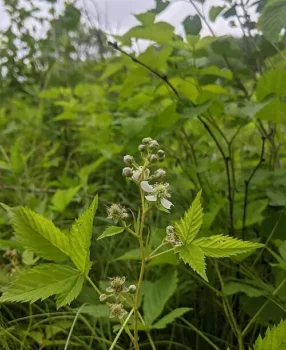
Big Horseshoe Lake Dewberry: A Lesser-Known Native Treasure
If you’re looking to add some native charm to your garden, you might want to consider the Big Horseshoe Lake dewberry (Rubus stipulatus). This delightfully named native plant is one of those hidden gems that doesn’t get nearly enough attention in gardening circles, probably because it’s got such a wonderfully specific common name that sounds more like a vacation destination than a plant!
What Exactly Is Big Horseshoe Lake Dewberry?
Big Horseshoe Lake dewberry is a perennial member of the Rubus family, which makes it a cousin to your garden-variety blackberries and raspberries. This low-growing shrub stays nice and compact, typically remaining under 1.5 feet tall and never exceeding 3 feet at maturity. It’s the kind of plant that knows how to stay in its lane – no aggressive spreading or towering over your other garden residents.
You might also see this plant listed under its botanical synonym, Rubus dissensus, in some older gardening references, but Rubus stipulatus is the current accepted name.
Where Does It Call Home?
This native beauty is naturally found across the upper Midwest, making itself at home in Iowa, Michigan, Minnesota, and Wisconsin. It’s perfectly adapted to the climate and growing conditions of this region, which means it’s likely to thrive with minimal fuss if you’re gardening in these areas.
- Species observed
- No observations
The Wet and Dry of It
One of the most interesting things about Big Horseshoe Lake dewberry is its flexibility when it comes to moisture. This plant has a facultative wetland status in both the Midwest and Northcentral/Northeast regions, which is a fancy way of saying it’s the ultimate garden diplomat – equally happy in wet spots and drier areas. This makes it incredibly useful for those tricky transition zones in your landscape where some plants struggle.
Why Consider Growing It?
Here’s where we need to be honest – specific information about this particular dewberry species is surprisingly scarce in gardening literature. It seems to be one of those sleeper natives that hasn’t caught the attention of mainstream horticulture yet. However, based on its Rubus family membership and native status, there are some educated guesses we can make about its benefits:
- As a native plant, it likely supports local wildlife and pollinators better than non-native alternatives
- Its compact size makes it suitable for smaller gardens or as a groundcover
- The flexibility with moisture conditions means it could work in various garden situations
- Being perennial, it provides year-round structure to your landscape
The Growing Challenge
Here’s where things get a bit tricky. Because Big Horseshoe Lake dewberry hasn’t made it into the mainstream gardening world, finding specific growing information, care tips, or even plants for sale can be challenging. Most nurseries and garden centers won’t carry it, and detailed cultivation guides are virtually non-existent.
Should You Plant It?
If you’re an adventurous gardener who loves supporting native plants and you happen to be in its native range, Big Horseshoe Lake dewberry could be an interesting addition to your landscape. Its small stature and moisture flexibility make it potentially useful for naturalized areas, native plant gardens, or rain gardens.
However, the lack of readily available information and plants might make this more of a someday project rather than a this weekend garden addition. You might have better luck starting with other native Rubus species that are more commonly available and better documented.
The Bottom Line
Big Horseshoe Lake dewberry represents one of those fascinating native plants that reminds us how much we still don’t know about our local flora. While it might not be the easiest plant to source or grow right now, it’s exactly the kind of species that native plant enthusiasts and conservation-minded gardeners help bring back into cultivation.
If you’re determined to try growing it, your best bet would be connecting with native plant societies in Iowa, Michigan, Minnesota, or Wisconsin, or specialized native plant nurseries that might be able to source it for you. Just remember – sometimes the most rewarding plants are the ones that require a little extra effort to find!