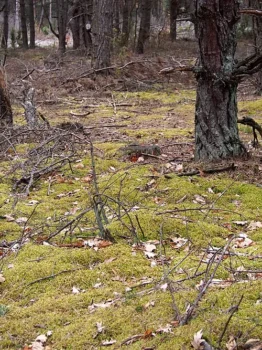
Big Red Stem Moss: A Native Groundcover Worth Knowing
If you’ve ever wandered through a shaded woodland and noticed carpets of feathery, green moss with distinctive reddish stems, you might have encountered big red stem moss (Pleurozium). This native North American moss species offers a unique opportunity to bring a piece of natural forest floor beauty into your own landscape.
What Exactly Is Big Red Stem Moss?
Big red stem moss belongs to the fascinating world of bryophytes – those ancient, non-flowering plants that have been carpeting our forests for millions of years. Unlike the flowering plants we typically think of when planning our gardens, mosses like Pleurozium are herbaceous plants that often attach themselves to solid surfaces like rocks, fallen logs, or tree bark rather than growing directly in soil.
What makes this particular moss special is right there in its name – those characteristic reddish stems that create a beautiful contrast against the green, feathery foliage. The growth pattern is typically dense and carpet-like, creating intricate branching patterns that add texture and visual interest to any shaded area.
Where Does Big Red Stem Moss Call Home?
As a native North American species, big red stem moss has adapted perfectly to our local ecosystems. Currently documented in New Jersey, this moss likely has a broader range throughout the northeastern regions, thriving in the cool, moist conditions typical of temperate forests.
- Species observed
- No observations
Is Big Red Stem Moss Beneficial for Your Garden?
Absolutely! While you won’t be planting this moss in the traditional sense, encouraging its presence in your landscape can offer several benefits:
- Natural groundcover: Creates living carpets in areas where traditional grass struggles
- Moisture retention: Helps maintain soil moisture and prevents erosion
- Wildlife habitat: Provides shelter and microhabitat for tiny creatures like insects and spiders
- Low maintenance: Requires no mowing, fertilizing, or watering once established
- Year-round interest: Stays green throughout most of the year
How to Identify Big Red Stem Moss
Spotting big red stem moss is easier than you might think once you know what to look for:
- Distinctive stems: Look for the telltale reddish or red-brown stems that give this moss its common name
- Feathery appearance: The foliage has a delicate, branched pattern that resembles tiny ferns
- Carpet formation: Grows in dense mats rather than individual clumps
- Preferred locations: Found in shaded, moist areas, often on decaying wood or forest floors
- Size: Forms low-growing carpets, typically just a few inches tall
Creating Moss-Friendly Conditions
Rather than trying to plant big red stem moss directly, focus on creating conditions where it might naturally establish itself:
- Maintain shade: Preserve tree cover or create shaded areas in your landscape
- Keep things moist: Ensure consistent moisture without waterlogging
- Minimize disturbance: Avoid heavy foot traffic in potential moss areas
- Provide surfaces: Leave fallen logs, rocks, or other natural surfaces where moss can attach
- Avoid chemicals: Skip fertilizers and pesticides in moss-friendly zones
The Bottom Line
Big red stem moss might not be the showstopping centerpiece of your garden, but it’s one of those quiet performers that adds authentic woodland character to shaded spaces. As a native species, it supports local ecosystems while providing practical benefits like erosion control and natural groundcover.
If you’re lucky enough to discover big red stem moss already growing on your property, consider yourself fortunate and do your best to preserve its habitat. For those hoping to encourage its presence, focus on creating the cool, moist, shaded conditions where this charming native moss thrives naturally.