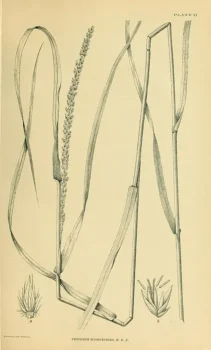
Big Sandbur: A Tough Native Grass with a Prickly Personality
When it comes to native grasses that can handle just about anything Mother Nature throws their way, big sandbur (Cenchrus myosuroides) is certainly a contender. But before you get too excited about adding this southeastern native to your garden, let’s talk about what makes this perennial grass both useful and… well, a bit challenging to live with.
What Exactly is Big Sandbur?
Big sandbur is a native perennial grass that calls the southeastern United States and Puerto Rico home. You’ll find this tough customer growing naturally across Alabama, Florida, Georgia, Louisiana, South Carolina, Texas, and Puerto Rico. As a member of the grass family, it’s what botanists call a graminoid – basically a fancy way of saying it’s grass-like in its growth habit.
This hardy native has been holding down sandy soils and coastal areas for centuries, and it’s earned quite a reputation for its tenacity. You might also see it listed under its scientific synonym, Cenchropsis myosuroides, in older botanical references.
- Species observed
- No observations
The Good, The Bad, and The Spiky
Let’s be honest – big sandbur isn’t going to win any beauty contests in the traditional garden sense. Its main claim to fame (or infamy, depending on your perspective) is its spiny seed heads, or burs, which give the plant its common name. These burs are incredibly effective at dispersing seeds, but they’re also notorious for hitching rides on clothing, pet fur, and bare feet – ouch!
Where Big Sandbur Shines
Despite its prickly personality, big sandbur has some genuinely valuable qualities that make it worth considering for specific landscaping situations:
- Erosion control champion: Those extensive root systems are fantastic for stabilizing sandy soils
- Coastal tough guy: It handles salt spray and sandy conditions like a champ
- Drought warrior: Once established, it laughs in the face of dry spells
- Low maintenance: This grass pretty much takes care of itself
Is Big Sandbur Right for Your Landscape?
Big sandbur works best in very specific landscape situations. It’s not your typical suburban lawn substitute, but it can be perfect for:
- Coastal restoration projects
- Naturalized meadow areas (away from foot traffic)
- Erosion control on slopes
- Wildlife habitat projects in appropriate regions
- Dune stabilization efforts
This native thrives in USDA hardiness zones 8-11, which aligns perfectly with its natural southeastern range.
Growing Conditions and Care
If you’ve decided that big sandbur fits your landscape needs, you’ll be pleased to know it’s refreshingly easy to grow. This grass prefers full sun and sandy, well-draining soils – think beach conditions. It’s remarkably drought tolerant once established and can even handle some salt exposure, making it ideal for coastal properties.
The plant’s wetland status varies depending on your region. In some areas, it’s classified as facultative, meaning it can handle both wet and dry conditions, while in others, it strongly prefers upland sites. This adaptability is part of what makes it such a successful native species.
A Word of Caution
Before you plant big sandbur, consider your long-term relationship with this grass. Those spiny seed heads aren’t just a minor inconvenience – they can be genuinely problematic in areas where people and pets spend time. If you have children who love to run barefoot through the yard or dogs that like to roll in the grass, big sandbur might not be your best choice.
Additionally, this grass can be quite vigorous once established, so make sure you’re prepared for its spreading nature.
The Bottom Line
Big sandbur is one of those plants that serves a very specific purpose in the native plant world. It’s not particularly ornamental, and it’s definitely not pet-friendly, but for erosion control, coastal restoration, and naturalized areas in its native range, it’s hard to beat. If you need a tough-as-nails native grass for challenging conditions and you can work around its spiky attitude, big sandbur might just be the unsung hero your landscape needs.
Just remember to warn your guests about those burs – your friendships will thank you!