Bigbract Verbena: A Tough Native Ground Cover That Pollinators Love
Meet bigbract verbena (Verbena bracteata), one of North America’s most underappreciated native wildflowers. This hardy little ground hugger might not win any beauty contests at first glance, but give it a chance and you’ll discover why prairie enthusiasts and pollinator gardeners are singing its praises.
What Is Bigbract Verbena?
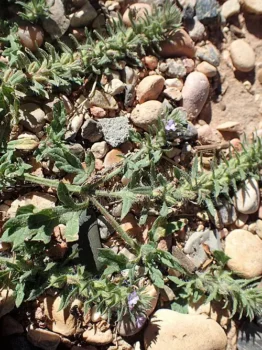
Bigbract verbena is a native North American forb that can live as an annual, biennial, or short-lived perennial depending on growing conditions. Don’t let the fancy botanical name fool you – this is a tough-as-nails plant that sprawls close to the ground, creating dense mats of small, serrated leaves topped with slender spikes of tiny purple flowers.
You might also encounter this plant under its synonyms Verbena bracteosa or Verbena imbricata in older gardening references, but they’re all the same reliable performer.
Where Does It Call Home?
This widespread native has one of the most impressive natural ranges you’ll find. Bigbract verbena grows naturally across most of the United States and Canada, from Alberta and British Columbia down to Florida and California, and just about everywhere in between. It’s equally at home in the prairies of Kansas, the mountains of Colorado, and the coastal plains of the Southeast.
- Species observed
- No observations
Why Your Garden (And Local Pollinators) Will Thank You
Here’s where bigbract verbena really shines – it’s a pollinator magnet disguised as a humble ground cover. Those small purple flower spikes might look understated, but they’re packed with nectar that attracts:
- Native bees and honeybees
- Butterflies, especially smaller species
- Beneficial wasps and flies
- Other tiny pollinators that larger flowers can’t accommodate
The flowers bloom from late spring through fall, providing a consistent nectar source when many other plants have called it quits for the season.
Perfect Spots for Planting
Bigbract verbena isn’t picky about where it lives, which makes it perfect for those challenging spots in your landscape:
- Prairie and wildflower gardens: Naturalized perfectly with native grasses and other wildflowers
- Xeriscapes and drought-tolerant gardens: Thrives with minimal water once established
- Slopes and erosion-prone areas: The spreading habit helps stabilize soil
- Parking strips and difficult spaces: Tolerates foot traffic and harsh conditions
- Rock gardens: Softens hard edges with its trailing growth
Growing Conditions That Make It Happy
One of bigbract verbena’s best qualities is its adaptability. This plant thrives in USDA zones 2-10, making it suitable for nearly every North American garden. Here’s what it prefers:
- Sunlight: Full sun for best flowering, tolerates partial shade
- Soil: Not fussy – grows in sandy, clay, or rocky soils
- Water: Drought tolerant once established, doesn’t like constantly wet feet
- pH: Adaptable to most soil pH levels
The wetland status varies by region – in most areas, it prefers upland sites but can handle some moisture variation, making it quite forgiving for gardeners still learning their soil’s personality.
Planting and Care Made Simple
Getting bigbract verbena established is refreshingly straightforward:
Starting from seed: Direct sow seeds in fall or early spring. The seeds need cold stratification, so fall planting often works best. Scatter seeds over prepared soil and barely cover – they need light to germinate.
Ongoing care: This is a plant it and forget it kind of native. Once established, it needs little to no supplemental watering. You can mow or trim it back in late winter if desired, but many gardeners let it self-seed naturally.
Spread and size: Individual plants stay low (usually under 6 inches tall) but can spread 1-2 feet wide. In ideal conditions, it may self-seed and create larger colonies over time.
A Few Things to Keep in Mind
Bigbract verbena is an enthusiastic self-seeder in the right conditions. This is generally a good thing for wildlife and naturalized areas, but if you prefer more controlled garden spaces, you might want to deadhead spent flowers or choose locations where spreading is welcome.
The plant’s low, spreading habit means it works best as a ground cover or filler rather than a focal point. Think of it as the reliable supporting actor that makes the whole garden production better.
The Bottom Line
Bigbract verbena might not have the showstopping blooms of some native wildflowers, but it offers something just as valuable – reliable, long-lasting pollinator support with almost zero maintenance requirements. For gardeners looking to support native ecosystems while creating resilient, low-maintenance landscapes, this humble verbena deserves serious consideration.
Whether you’re restoring a prairie, creating a pollinator pathway, or just need something tough for that challenging corner of your yard, bigbract verbena is ready to prove that sometimes the best garden performers are the ones that just quietly do their job, season after season.