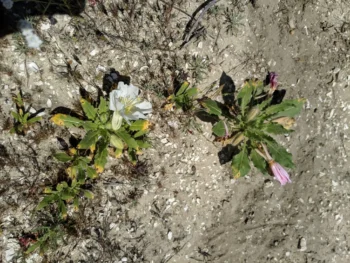
Birdcage Evening Primrose: A California Native Worth Knowing
If you’re looking to add some authentic California charm to your native plant garden, you might want to get acquainted with the birdcage evening primrose (Oenothera deltoides cognata). This intriguingly named wildflower is a true Golden State native that brings a touch of the wild to cultivated spaces.
What Makes It Special?
The birdcage evening primrose is classified as a forb – essentially a flowering plant that stays herbaceous rather than developing woody stems. What’s particularly interesting about this plant is its dual nature: it can behave as either an annual (living for just one growing season) or a perennial (returning year after year), adapting to the conditions it finds itself in.
This adaptive quality makes it a fascinating addition to native plant collections, though you might need to do some detective work to source it, as it’s not as commonly available as some of its evening primrose relatives.
Where Does It Call Home?
This California native has made the Golden State its exclusive home within the lower 48 states. As a true local, it’s perfectly adapted to California’s unique climate patterns and growing conditions.
- Species observed
- No observations
Should You Grow Birdcage Evening Primrose?
Here’s where things get a bit tricky. While this native plant certainly has its merits, detailed growing information specifically for Oenothera deltoides cognata is quite limited in readily available sources. This might be because:
- It’s often grouped with other evening primrose varieties in cultivation guides
- It may have specific habitat requirements that make it challenging to grow outside its natural range
- It might be more of a wildland species than a garden-friendly cultivar
The Evening Primrose Family Connection
While we may not have all the specifics on this particular variety, we do know it belongs to the evening primrose family, which gives us some clues about its potential garden behavior. Evening primroses are generally known for:
- Often blooming in the evening (hence the name!)
- Producing cheerful, four-petaled flowers
- Being relatively low-maintenance once established
- Attracting nighttime pollinators like moths
Growing Considerations
If you’re determined to try growing birdcage evening primrose, your best bet is to:
- Contact native plant societies in California for specific cultivation advice
- Look for seeds or plants from reputable native plant nurseries
- Try to mimic its natural California habitat conditions
- Be prepared for some trial and error, as this isn’t your typical garden center find
The Bottom Line
Birdcage evening primrose represents the kind of specialized native plant that adds authenticity to California native gardens, but it may require some extra research and patience to grow successfully. If you’re new to native gardening, you might want to start with more readily available California natives and work your way up to the more challenging species like this one.
The reward for your efforts? You’ll be growing a plant that truly belongs in California’s landscape and supporting the local ecosystem in the most authentic way possible.