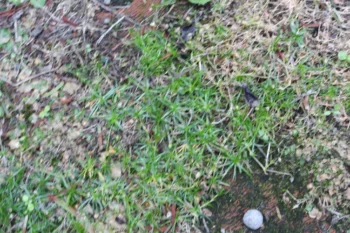
Birdeye Pearlwort: A Tiny Ground Cover with Big Potential
Meet birdeye pearlwort (Sagina procumbens), a charming little plant that’s been quietly making itself at home across North America. This diminutive perennial might not win any beauty contests at first glance, but don’t let its modest appearance fool you – this tough little ground cover has some serious staying power.
What Exactly Is Birdeye Pearlwort?
Birdeye pearlwort is a low-growing forb that forms dense, moss-like mats. As a perennial, it comes back year after year, slowly spreading to create a living carpet. The plant produces tiny white flowers with four delicate petals, though you might need to look closely to spot them among the fine, needle-like foliage.
This little plant has quite the travel resume. It’s native to Canada, Greenland, and St. Pierre and Miquelon, but has naturalized throughout much of the United States and Alaska. You can find it growing in an impressive range of locations, from British Columbia to Newfoundland, and south through most U.S. states including California, Texas, and even Hawaii.
- Species observed
- No observations
The Good, The Bad, and The Practical
So should you invite birdeye pearlwort into your garden? That depends on what you’re looking for and where you live.
The Positives:
- Extremely hardy (USDA zones 3-8)
- Tolerates foot traffic reasonably well
- Low maintenance once established
- Works well as living mortar between stepping stones
- Provides habitat for small insects
- Thrives in moist conditions where other plants struggle
The Considerations:
- Can self-seed and spread beyond intended areas
- Very small flowers offer limited ornamental impact
- May not compete well with more aggressive plants
- In areas where it’s non-native, consider native alternatives first
Where Does It Fit in Your Landscape?
Birdeye pearlwort shines in specific garden situations. It’s perfect for rock gardens, alpine settings, and those tricky spots between pavers where you need something that can handle occasional footsteps. The plant’s moss-like appearance makes it an excellent choice for creating a naturalized, woodsy feel in shaded areas.
This isn’t a plant for formal flower borders or areas where you want dramatic color. Instead, think of it as nature’s carpet – subtle, resilient, and quietly functional.
Growing Birdeye Pearlwort Successfully
The good news is that birdeye pearlwort isn’t particularly fussy about its growing conditions. It adapts to both wetland and non-wetland environments, though it generally prefers consistently moist, well-draining soil.
Ideal Conditions:
- Partial shade to full sun (though it appreciates some protection in hot climates)
- Moist, well-draining soil
- Cool, humid conditions
- Areas with regular moisture
Planting and Care Tips:
- Plant in spring or early fall for best establishment
- Space plants about 6 inches apart for ground cover
- Water regularly until established
- Once mature, it’s quite drought-tolerant
- Minimal fertilization needed
- May self-seed, so monitor spread if desired
A Word About Native Alternatives
If you live in an area where birdeye pearlwort isn’t native (which includes much of the lower 48 states), consider exploring native ground covers first. Native plants support local ecosystems more effectively and often require less maintenance once established. Some excellent native alternatives might include wild ginger, creeping phlox, or native sedges, depending on your region.
The Bottom Line
Birdeye pearlwort is one of those unassuming plants that quietly does its job without asking for much attention. It’s not going to stop traffic with stunning blooms, but it will reliably fill in those challenging spots where other plants fear to tread. If you need a hardy, low-maintenance ground cover and don’t mind its modest appearance, this little plant might just be the perfect fit.
Just remember to keep an eye on its spreading habits and consider the native plant community in your area before making your final decision. Sometimes the best garden choices are the ones that work harmoniously with the local ecosystem – and that might mean choosing a native alternative instead.