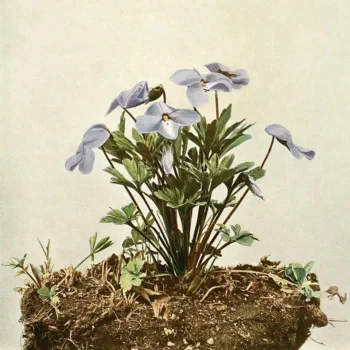
Birdfoot Violet: A Charming Native Groundcover for Your Garden
If you’re looking for a delightful native plant that brings both beauty and ecological value to your garden, meet the birdfoot violet (Viola pedata). This charming perennial wildflower is a true gem for gardeners who appreciate plants with character and wildlife appeal.
What Makes Birdfoot Violet Special?
The birdfoot violet gets its memorable common name from its distinctive deeply divided leaves that resemble—you guessed it—a bird’s foot! This perennial forb creates lovely low-growing rosettes that make excellent groundcover. In spring, it produces gorgeous purple flowers, and sometimes you’ll find bicolored varieties with purple and white blooms that are simply stunning.
As a native species, Viola pedata has been gracing North American landscapes long before European settlers arrived. It’s found naturally across a vast range, thriving in states from Maine down to Georgia and as far west as Texas and Minnesota, plus parts of southeastern Canada including Ontario.
- Species observed
- No observations
Why Your Garden (and Local Wildlife) Will Love It
Beyond its obvious visual appeal, birdfoot violet is a powerhouse for supporting local ecosystems. Here’s what makes it so valuable:
- Native bees, butterflies, and other small pollinators absolutely love the spring flowers
- It serves as a host plant for fritillary butterfly caterpillars
- Provides food for terrestrial birds, contributing 5-10% of their diet
- Offers modest cover for small wildlife
- Supports the native plant communities that local animals depend on
Perfect Spots for Planting Birdfoot Violet
This adaptable native works beautifully in several garden settings:
- Woodland edges and native plant gardens
- Rock gardens where its drought tolerance shines
- Naturalized areas and restoration projects
- As groundcover in partially shaded spots
- Mixed wildflower meadows
Growing Conditions and Care
One of the best things about birdfoot violet is how easy-going it is! Here’s what it prefers:
Soil: Well-drained, sandy, or rocky soils work best. It actually tolerates poor soils better than rich, heavy ones—so don’t pamper it too much!
Light: Partial shade to full sun, making it quite versatile for different garden spots.
Water: Drought tolerant once established. This plant prefers the tough love approach to watering.
Climate: Hardy in USDA zones 3-8, so it can handle everything from cold northern winters to warm southern summers.
Wetland Status: Primarily an upland plant that rarely occurs in wetlands, though it can occasionally tolerate wetter conditions in some regions.
Planting and Care Tips
Getting birdfoot violet established in your garden is refreshingly straightforward:
- Plant in fall or early spring when temperatures are cool
- Space plants about 6-12 inches apart for groundcover effect
- Water lightly after planting, then let nature take over
- Avoid fertilizing—rich soils can actually weaken the plant
- Allow some plants to self-seed for natural spread
- Minimal maintenance required once established
The Bottom Line
Birdfoot violet is one of those wonderful native plants that proves you don’t need exotic species to create a beautiful, wildlife-friendly garden. Its distinctive foliage, lovely spring flowers, and important ecological role make it a smart choice for gardeners who want to support local ecosystems while enjoying a truly unique and attractive plant.
Whether you’re creating a native plant sanctuary, looking for low-maintenance groundcover, or simply want to add some authentic local character to your landscape, Viola pedata delivers on all fronts. Plus, knowing that you’re supporting native pollinators and birds makes this little violet even more rewarding to grow!