Bitter Gooseberry: A Thorny California Native Worth Growing
Meet the bitter gooseberry (Ribes amarum), a charming yet somewhat prickly California native that deserves a spot in your garden—if you can find it! This endemic shrub might not be the sweetest member of the gooseberry family, but it more than makes up for its tart berries with its ecological value and unique character.
What is Bitter Gooseberry?
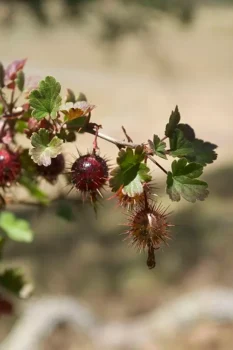
Bitter gooseberry is a perennial, multi-stemmed woody shrub that typically grows 4 to 5 feet tall, though it can reach up to 13-16 feet under ideal conditions. This thorny beauty produces small, palmately lobed leaves and clusters of greenish-yellow flowers in spring, followed by dark purple berries that are, as the name suggests, quite bitter to human taste buds.
You might also see this plant listed under its synonyms: Grossularia amara, Ribes amarum var. hoffmannii, or Ribes mariposanum in older botanical references.
Where Does It Call Home?
This California exclusive is native only to the Golden State, where it naturally occurs in the Sierra Nevada mountains and adjacent foothill regions. As a true California endemic, bitter gooseberry represents the unique botanical heritage of the region.
- Species observed
- No observations
A Word About Conservation
Here’s something important to know: bitter gooseberry has a conservation status that suggests it may be uncommon in parts of its range. If you’re interested in adding this native to your garden, make sure to source your plants responsibly from reputable native plant nurseries that propagate their own stock rather than wild-collecting.
Why Grow Bitter Gooseberry?
While you probably won’t be making jam from its berries, bitter gooseberry offers several compelling reasons to include it in your landscape:
- Supports native pollinators with early spring blooms that attract bees and butterflies
- Provides food and habitat for wildlife, even if the berries aren’t to human taste
- Adds authentic California character to native plant gardens
- Requires minimal water once established, perfect for drought-conscious gardeners
- Interesting thorny architecture provides year-round structure
Perfect Garden Spots
Bitter gooseberry thrives in several garden styles:
- Native California gardens where it can mingle with other indigenous plants
- Wildlife gardens focused on supporting local ecosystems
- Drought-tolerant landscapes that celebrate water-wise gardening
- Naturalized areas where it can spread and form colonies
- Understory plantings beneath taller native trees
Growing Conditions and Care
This mountain native is surprisingly adaptable but has some preferences:
- Sunlight: Partial shade to full sun
- Soil: Well-drained soils; tolerates various soil types
- Water: Drought tolerant once established, but appreciates occasional deep watering
- Climate: Hardy in USDA zones 7-9, adapted to Mediterranean and mountain climates
Planting and Care Tips
Getting your bitter gooseberry off to a good start is straightforward:
- Plant in fall or early spring for best establishment
- Provide regular water during the first growing season
- Mulch around the base to retain moisture and suppress weeds
- Minimal pruning required—just remove dead or damaged wood
- Be patient; like many natives, it may take a season or two to really take off
The Bottom Line
Bitter gooseberry may not be the showiest shrub in the garden, but it’s a authentic piece of California’s natural heritage that supports local wildlife while requiring minimal fuss from gardeners. If you’re passionate about native plants and can source it responsibly, this thorny character makes a worthy addition to any California native garden. Just remember—admire the berries, but maybe skip the taste test!