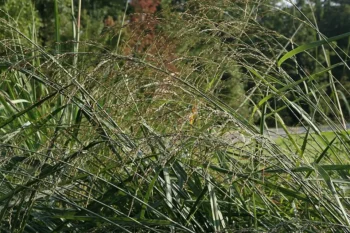
Bitter Panicgrass: A Resilient Native Grass for Challenging Landscapes
If you’re searching for a tough, low-maintenance native grass that can handle whatever Mother Nature throws at it, let me introduce you to bitter panicgrass (Panicum amarum). This unsung hero of the grass world might not win any beauty contests, but it’s the reliable friend your garden needs – especially if you’re dealing with challenging growing conditions.
What Exactly is Bitter Panicgrass?
Bitter panicgrass is a perennial bunch grass native to the lower 48 states. Don’t let the name fool you – there’s nothing bitter about adding this resilient plant to your landscape! This hardy grass belongs to the true grass family and grows in an upright, clumping form that can reach up to 5 feet tall at maturity.
Where Does It Call Home?
This adaptable native has quite an impressive range across the United States. You’ll find bitter panicgrass thriving naturally in Alabama, Connecticut, Delaware, Florida, Georgia, Louisiana, Maryland, Massachusetts, Mississippi, New Jersey, New Mexico, New York, North Carolina, Pennsylvania, Rhode Island, South Carolina, Texas, Virginia, and West Virginia. From coastal plains to inland areas, this grass has proven its versatility across diverse climates and growing conditions.
- Species observed
- No observations
Why Your Garden Might Love This Grass
Bitter panicgrass brings several compelling qualities to the landscape:
- Exceptional drought tolerance – Once established, this grass laughs in the face of dry spells
- Erosion control champion – Its robust root system helps stabilize soil on slopes and problem areas
- Salt tolerance – Perfect for coastal gardens or areas with salt spray
- Low maintenance – Set it and forget it gardening at its finest
- Wildlife value – Seeds provide food for birds and small wildlife
- Long lifespan – This perennial will be with you for the long haul
The Look and Feel
Bitter panicgrass forms dense, upright clumps with coarse-textured green foliage. During its active growing period in summer, you’ll notice small yellow flowers that, while not particularly showy, add subtle interest to the plant. The growth form is described as bunch-type, meaning it grows in distinct clumps rather than spreading aggressively – a trait many gardeners appreciate for maintaining defined garden spaces.
Perfect Garden Situations
This versatile grass shines in several landscape scenarios:
- Coastal gardens – Its salt tolerance makes it ideal for oceanfront properties
- Xeriscaping projects – Drought tolerance means less watering
- Erosion-prone slopes – Strong roots help prevent soil loss
- Prairie restorations – Adds authentic native character
- Low-maintenance landscapes – Perfect for busy gardeners
- Naturalized areas – Provides structure in informal garden spaces
Growing Conditions That Make It Happy
Bitter panicgrass is refreshingly undemanding when it comes to growing conditions:
- Sunlight: Full sun is best – this grass is shade intolerant
- Soil: Adapts to coarse and medium-textured soils but struggles with heavy clay
- pH range: Tolerates acidic to neutral soils (pH 5.0-7.5)
- Water needs: Medium moisture use, but highly drought tolerant once established
- Climate: Requires at least 180 frost-free days and can handle temperatures down to -18°F
- USDA Hardiness Zones: Zones 6-10
Wetland Considerations
Bitter panicgrass has varying wetland statuses depending on your region. In most areas, it’s classified as Facultative Upland, meaning it typically grows in non-wetland conditions but can occasionally pop up in wetland edges. In the Atlantic and Gulf Coastal Plain, it has a Facultative status, appearing equally in wetlands and uplands. This flexibility makes it valuable for transitional areas in your landscape.
Planting and Care Tips
Getting bitter panicgrass established is straightforward:
- Propagation: Grow from seed – it’s routinely available commercially
- Timing: Plant in spring or fall for best establishment
- Seeding rate: With 325,000 seeds per pound, a little goes a long way
- Germination: Seeds require cold stratification, so fall planting works well
- Maintenance: Cut back in late winter before new growth begins
- Patience: Seedling vigor is medium, so give it time to establish
Wildlife and Ecological Benefits
While bitter panicgrass flowers are wind-pollinated (meaning limited direct pollinator benefits), this native grass contributes to ecosystem health in other important ways. Its abundant seed production provides valuable food for birds and small wildlife, while its dense growth habit offers shelter and nesting sites. The deep root system also helps improve soil structure and prevents erosion – benefits that extend far beyond your garden borders.
The Bottom Line
Bitter panicgrass might not be the flashiest plant in your garden, but it’s certainly one of the most dependable. If you’re looking for a native grass that can handle challenging conditions while requiring minimal care, this resilient performer deserves serious consideration. It’s particularly valuable for gardeners dealing with drought, salt exposure, or erosion issues – problems where many other plants simply throw in the towel.
Remember, successful native gardening is often about choosing plants that naturally thrive in your local conditions rather than fighting against them. Bitter panicgrass embodies this philosophy perfectly, offering a low-maintenance solution that supports local ecosystems while solving real landscape challenges.