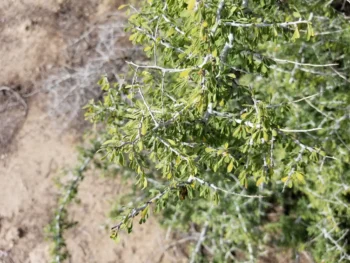
Bitter Snakewood: A Hardy Native Shrub for Desert Gardens
If you’re looking for a tough, drought-tolerant native shrub that can handle the harsh conditions of the American Southwest, bitter snakewood (Condalia globosa var. pubescens) might just be the unsung hero your garden needs. This resilient perennial shrub has been quietly thriving in the deserts of Arizona and California long before landscaping was even a concept, and it’s ready to bring that same tenacity to your yard.
What is Bitter Snakewood?
Bitter snakewood is a multi-stemmed woody shrub that typically stays under 13-16 feet tall, making it a manageable choice for most garden spaces. True to its desert origins, this plant has adapted to survive in some pretty challenging conditions, developing characteristics that make it both hardy and distinctive in the landscape.
Where Does Bitter Snakewood Grow Naturally?
This native beauty calls the southwestern United States home, with documented populations in Arizona and California. It’s perfectly adapted to the arid and semi-arid regions of these states, where it has evolved alongside other desert-adapted plants and wildlife.
- Species observed
- No observations
Why Consider Bitter Snakewood for Your Garden?
There are several compelling reasons to give this native shrub a spot in your landscape:
- Water-wise gardening: Once established, bitter snakewood requires minimal irrigation, making it perfect for xeriscaping projects
- Low maintenance: This tough shrub can handle neglect better than most plants, requiring little ongoing care
- Native wildlife support: As a native species, it provides habitat and resources for local wildlife
- Climate appropriate: It’s naturally suited to hot, dry conditions that challenge many other plants
Important Conservation Note
Before you rush out to plant bitter snakewood, there’s something important to know: this variety has a Global Conservation Status of S5T3T4, which indicates some level of conservation concern. This means that while you can still grow it, you should only source your plants from reputable nurseries that propagate their stock responsibly rather than collecting from wild populations. Always ask about the origin of your plants!
Growing Conditions and Care
Bitter snakewood thrives in conditions that mimic its natural desert habitat:
- Sunlight: Full sun exposure is essential for healthy growth
- Soil: Well-draining soil is crucial – this plant cannot tolerate waterlogged conditions
- Water: Low water requirements once established, though some supplemental irrigation may be needed during extreme drought
- Climate zones: Best suited for USDA hardiness zones 8-10
- Spacing: Allow adequate space for the shrub to reach its mature size
Design Ideas and Garden Types
Bitter snakewood works wonderfully in several garden styles:
- Desert gardens: A natural fit alongside other native desert plants
- Xeriscaping: Perfect for water-conscious landscaping
- Native plant gardens: Helps create authentic regional plant communities
- Wildlife gardens: Provides habitat for native fauna
Planting and Establishment Tips
Getting your bitter snakewood off to a good start is relatively straightforward:
- Plant in fall or early spring when temperatures are moderate
- Dig a hole only as deep as the root ball but twice as wide
- Backfill with native soil – no amendments needed
- Water regularly during the first growing season to help establish roots
- Apply a thin layer of gravel mulch to conserve moisture and suppress weeds
Is Bitter Snakewood Right for Your Garden?
This native shrub is an excellent choice if you live within its natural range (Arizona or California), want to reduce water usage in your landscape, and appreciate plants that can thrive with minimal intervention. However, it’s not the right fit if you live outside its hardiness zones, prefer lush, tropical-looking gardens, or have poorly draining soil that stays wet.
Remember to source your plants responsibly due to its conservation status, and you’ll have a tough, authentic piece of the American Southwest right in your own backyard. Sometimes the best garden plants are the ones that have been perfecting their survival skills for thousands of years!