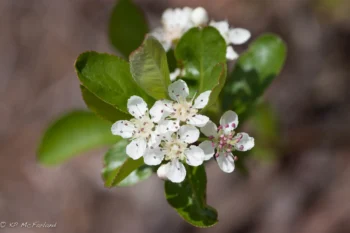
Black Chokeberry: A Native Gem for Your Garden
If you’re looking for a low-maintenance native shrub that delivers year-round interest, meet the black chokeberry (Aronia melanocarpa). This unsung hero of North American landscapes packs a serious punch with spring blooms, fall berries, and fiery autumn foliage that’ll make your neighbors stop and stare.
What Makes Black Chokeberry Special?
Black chokeberry is a native perennial shrub that typically grows 6 feet tall and can spread up to 15 feet at maturity through its thicket-forming growth habit. Don’t let the name fool you – while the berries are indeed astringent when raw (hence chokeberry), they’re actually quite valuable for both wildlife and adventurous gardeners who enjoy making jams and jellies.
Where Does It Call Home?
This adaptable native spans an impressive range across eastern North America. You’ll find black chokeberry thriving from Canada’s Maritime provinces down to Georgia, and west to Minnesota and Arkansas. It’s naturally at home in states including Maine, Vermont, New Hampshire, Massachusetts, Connecticut, Rhode Island, New York, New Jersey, Pennsylvania, Delaware, Maryland, Virginia, West Virginia, North Carolina, South Carolina, Georgia, Ohio, Michigan, Indiana, Illinois, Wisconsin, Minnesota, Iowa, Missouri, Kentucky, Tennessee, Mississippi, Alabama, and Arkansas, plus several Canadian provinces.
- Species observed
- No observations
Important note for Arkansas gardeners: Black chokeberry has a rarity status of S1 in Arkansas, meaning it’s critically imperiled in the state. If you’re in Arkansas and want to grow this beauty, please source your plants responsibly from reputable nurseries rather than collecting from wild populations.
A Shrub for All Seasons
Black chokeberry earns its keep throughout the growing season:
- Spring: Clusters of small white flowers create a delicate, conspicuous display that pollinators absolutely love
- Summer: Dense green foliage provides structure and backdrop for other garden plants
- Fall: The real showstopper – leaves transform into brilliant shades of red and orange while dark purple-black berries add another layer of interest
- Winter: The multi-stemmed structure provides habitat and visual interest in the dormant landscape
Perfect Garden Roles
Black chokeberry is incredibly versatile in landscape design. It shines as:
- An understory plant in woodland gardens
- A naturalizing shrub for low-maintenance areas
- A key player in rain gardens and bioswales
- Wildlife habitat in native plant gardens
- An edible landscaping component for the adventurous
- Fall color accent in mixed borders
Growing Conditions That Make It Happy
One of black chokeberry’s best qualities is its adaptability. Here’s what it prefers:
- USDA Hardiness Zones: 3-8
- Soil: Acidic conditions (pH 4.4-6.5), adaptable to coarse and medium-textured soils
- Moisture: Loves consistent moisture and tolerates wet conditions well
- Sun exposure: Shade tolerant, though it’ll produce more flowers and berries with some sun
- Drainage: Medium anaerobic tolerance means it can handle periodic flooding
Wetland Wonder
Black chokeberry’s relationship with water varies by region. In most areas, it’s facultative, meaning it’s equally happy in wet or dry conditions. However, in the Great Plains, it’s considered an obligate wetland plant, while in the Midwest and Western regions, it usually prefers wetland conditions but can adapt to drier sites.
Planting and Care Tips
Getting started with black chokeberry is refreshingly straightforward:
- Planting: Spring or fall are ideal times. Space plants 3-8 feet apart depending on your desired density
- Establishment: Water regularly the first year, then this drought-tolerant native can largely fend for itself
- Propagation: Easily propagated by cuttings, though seeds require specific conditions
- Maintenance: Minimal pruning needed – just remove dead or damaged wood in late winter
- Fertilization: Generally unnecessary in appropriate soil conditions
Wildlife and Pollinator Benefits
Black chokeberry is a wildlife magnet. The spring flowers attract bees, butterflies, and other beneficial insects, while the berries feed over 60 species of birds. The dense, thicket-forming growth habit provides excellent nesting sites and cover for small mammals and birds.
Is Black Chokeberry Right for Your Garden?
Black chokeberry deserves a spot in your landscape if you:
- Want low-maintenance, native plants
- Need plants for challenging wet or acidic sites
- Desire multi-season interest
- Want to support local wildlife and pollinators
- Appreciate subtle beauty over flashy showstoppers
- Have space for a plant that naturalizes and spreads
The main considerations are its eventual size (it can spread significantly) and its preference for acidic soil. If you have neutral to alkaline soil, you might want to consider other native alternatives.
Black chokeberry proves that sometimes the best garden plants are the ones that have been quietly thriving in our native landscapes all along. Give this adaptable beauty a try, and you’ll discover why more gardeners are falling in love with this North American treasure.