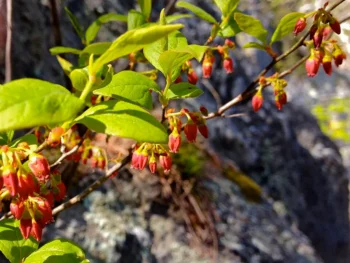
Black Huckleberry: A Native Gem for Shade Gardens
If you’re looking for a low-maintenance native shrub that offers delicious berries, beautiful flowers, and stunning fall color, let me introduce you to the black huckleberry (Gaylussacia baccata). This underappreciated native deserves a spot in more gardens across eastern North America!
What is Black Huckleberry?
Black huckleberry is a perennial shrub native to a surprisingly large swath of North America, including much of the eastern United States and southeastern Canada. You’ll find this hardy plant growing naturally from Newfoundland down to Georgia and as far west as Minnesota and Arkansas. It’s also native to St. Pierre and Miquelon, showing just how adaptable this species can be.
- Species observed
- No observations
This slow-growing shrub typically reaches about 4 feet tall at maturity, though it may take its sweet time getting there – expect around 2 feet of height after 20 years. The plant forms multiple stems from the ground, creating a nice bushy appearance that works well in naturalized settings.
Why Plant Black Huckleberry?
There are several compelling reasons to consider adding black huckleberry to your landscape:
- Gorgeous spring flowers: In late spring, the shrub produces conspicuous white, bell-shaped flowers that attract bees and other pollinators
- Tasty summer berries: The small black berries are edible and beloved by both wildlife and humans
- Low maintenance: Once established, this shrub is quite drought tolerant and has low fertility requirements
- Shade tolerant: Perfect for those tricky shaded spots where many plants struggle
- Native plant benefits: Supports local ecosystems and wildlife
- Fire tolerant: Shows good resilience to fire, making it suitable for areas prone to wildfires
Growing Conditions
Black huckleberry is refreshingly easy to please, but it does have some specific preferences:
- Soil: Prefers acidic soils with a pH between 4.5 and 6.5 – think blueberry conditions
- Light: Shade tolerant, making it perfect for woodland gardens
- Water: Low to medium moisture needs; drought tolerant once established
- Climate: Hardy in USDA zones 3-8, tolerating temperatures down to -33°F
- Soil texture: Adaptable to coarse, medium, or fine-textured soils
The plant typically grows in upland areas rather than wetlands, though it can occasionally be found in wetter conditions.
Perfect Garden Settings
Black huckleberry shines in several types of garden settings:
- Woodland and shade gardens
- Native plant landscapes
- Wildlife gardens
- Naturalized areas
- Erosion control on slopes
- Acid-loving plant collections (alongside rhododendrons, azaleas, and blueberries)
Planting and Care Tips
Getting your black huckleberry established is straightforward:
- When to plant: Spring is ideal for planting
- Spacing: Allow 3-4 feet between plants if planting multiple shrubs
- Soil prep: Amend heavy clay soils with organic matter; ensure good drainage
- Watering: Keep consistently moist the first year, then reduce watering as the plant establishes
- Fertilizing: Minimal fertilization needed – this plant actually prefers low-fertility conditions
- Pruning: Light pruning after fruiting if needed to maintain shape
- Mulching: Apply organic mulch to retain moisture and suppress weeds
Propagation
If you want to grow more black huckleberries, you have several options. The plant can be propagated by seed (though seedling vigor is low), bare root plants, or containers. Seeds can be collected in summer when the berries ripen, though be patient – this species spreads slowly both by seed and vegetatively.
Important Conservation Note
While black huckleberry is generally common throughout its range, it has a rarity status of S3 in Arkansas, meaning it’s uncommon there. If you’re gardening in Arkansas, consider planting this species to help support local populations, but make sure to source your plants responsibly from reputable native plant nurseries.
The Bottom Line
Black huckleberry is one of those wonderful native plants that gives back far more than it asks for. With minimal care requirements, beautiful flowers, tasty berries, and excellent wildlife value, it’s a perfect choice for gardeners looking to create more sustainable, low-maintenance landscapes. Whether you’re starting a woodland garden or just want to add some native flair to a shady corner, black huckleberry deserves serious consideration.
Just remember to be patient with this slow grower – good things come to those who wait, and in a few years, you’ll be rewarded with a beautiful, productive shrub that will serve your garden and local wildlife for decades to come.