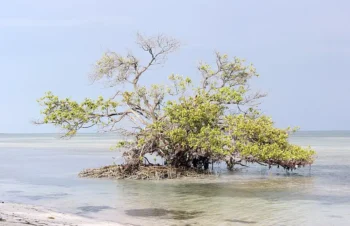
Black Mangrove: A Remarkable Coastal Native for Specialized Gardens
If you’re dreaming of creating a unique coastal garden or contributing to wetland restoration, the black mangrove (Avicennia germinans) might just be the extraordinary plant you’ve been searching for. This fascinating native species brings both ecological benefits and distinctive beauty to the right gardening situation – though it’s definitely not your average backyard shrub!
What Makes Black Mangrove Special
Black mangrove is a perennial woody plant that typically grows as a multi-stemmed shrub, usually reaching 13-16 feet in height, though it can grow up to 30 feet at maturity under ideal conditions. Don’t let the name fool you – this isn’t your typical mangrove tree. With its dense, dark green foliage and distinctive vase-shaped growth pattern, it creates an impressive presence in the landscape.
The plant produces small, fragrant white flowers that bloom year-round, making it a continuous source of nectar for pollinators. These blooms give way to distinctive green seed propagules that are quite conspicuous and add to the plant’s unique character.
Where Black Mangrove Calls Home
This remarkable plant is native to the lower 48 states, specifically flourishing in Florida, Louisiana, Mississippi, and Texas. It’s also native to Puerto Rico and the U.S. Virgin Islands. Black mangrove thrives in coastal wetland environments where few other plants can survive.
- Species observed
- No observations
Growing Conditions: Not for Every Garden
Here’s where things get interesting – and challenging. Black mangrove has very specific needs that make it unsuitable for most traditional gardens:
- Water requirements: This plant is classified as Obligate Wetland, meaning it almost always occurs in wetlands and requires consistently wet conditions
- Soil preferences: Adapted to fine and medium-textured soils, with medium salt tolerance
- Climate needs: Requires at least 328 frost-free days per year and minimum temperatures no lower than 10°F (USDA zones 9b-11)
- Sun exposure: Shade intolerant, requiring full sun
- pH tolerance: Prefers slightly acidic to neutral conditions (pH 6.0-8.0)
Is Black Mangrove Right for Your Garden?
Black mangrove isn’t suitable for typical residential landscapes, but it can be perfect for specialized situations:
Ideal for:
- Coastal restoration projects
- Wetland gardens in appropriate climates
- Specialized tropical/subtropical landscapes with water features
- Erosion control along shorelines
- Educational or demonstration gardens
Not suitable for:
- Traditional residential gardens
- Areas with cold winters
- Dry or drought-prone locations
- Inland locations without access to brackish or salt water
Benefits Beyond Beauty
If you can provide the right conditions, black mangrove offers numerous benefits:
- Rapid growth: Grows quickly once established
- Pollinator support: Year-round white flowers attract bees, butterflies, and other beneficial insects
- Coastal protection: Excellent for erosion control and storm surge protection
- Low maintenance: Once established, requires minimal fertilization due to low fertility requirements
- Long-lived: With proper conditions, can live for many decades
Planting and Care Tips
If you’re in the right climate zone and have appropriate wetland conditions, here’s how to successfully grow black mangrove:
- Propagation: Can be grown from seed, bare root, or container plants. Seeds are abundantly available year-round and have high germination vigor
- Planting density: Space plants 320-640 per acre for restoration projects
- Watering: Must have consistent access to water – this plant cannot tolerate drought
- Soil preparation: Ensure soil stays consistently moist to wet
- Maintenance: Minimal once established, but monitor for adequate water levels
The Bottom Line
Black mangrove is a fascinating native plant that serves crucial ecological functions in coastal environments. While it’s not suitable for most home gardens due to its specialized requirements, it’s an excellent choice for coastal restoration projects, specialized wetland gardens, or unique landscape situations in warm, coastal climates.
If you’re passionate about native plants and have the right conditions – or are involved in coastal restoration – black mangrove can be a rewarding addition to your plant palette. Just remember that success with this species requires commitment to providing its very specific growing conditions. When those needs are met, you’ll be rewarded with a unique, fast-growing native that supports local ecosystems while creating an truly distinctive landscape feature.