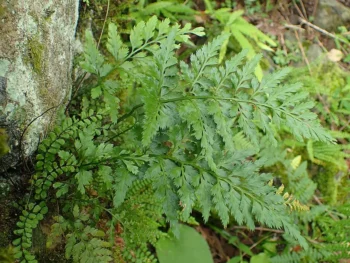
Black Spleenwort: A Delicate Native Fern for Rocky Gardens
If you’re looking for a graceful native fern that thrives in challenging rocky conditions, black spleenwort (Asplenium adiantumnigrum) might just be your new garden companion. This perennial beauty brings an elegant touch to spaces where other plants struggle to establish themselves.
What Makes Black Spleenwort Special
Black spleenwort, also known by its Hawaiian name `iwa`iwa, is a delicate fern with distinctive dark stems that contrast beautifully with its finely divided, lacy fronds. Unlike many garden plants that demand rich, moist soil, this hardy native actually prefers the lean, well-draining conditions found in rocky crevices and cliff faces.
Where You’ll Find It Growing Wild
This adaptable fern is native to both Hawaii and the continental United States, naturally occurring in Arizona, Colorado, Hawaii, and Utah. It has earned its place as a true native across diverse landscapes, from desert canyons to mountain slopes.
- Species observed
- No observations
Perfect Spots in Your Garden
Black spleenwort shines in several garden settings:
- Rock gardens and stone walls
- Woodland or shade gardens
- Native plant landscapes
- Xeriscaping projects
- Naturalistic designs that mimic wild landscapes
Its compact size and refined appearance make it an excellent accent plant that adds texture and movement without overwhelming smaller spaces.
Growing Conditions That Make It Happy
One of black spleenwort’s greatest strengths is its preference for conditions that challenge many other plants. Here’s what it loves:
- Light: Partial to full shade
- Soil: Well-draining, rocky or gravelly soil
- Water: Drought tolerant once established; avoid overwatering
- Climate: Hardy in USDA zones 4-9
According to wetland classifications, black spleenwort is considered Facultative Upland, meaning it typically grows in non-wetland areas but can occasionally tolerate wetter conditions.
Planting and Care Made Simple
The key to success with black spleenwort is remembering that less is often more:
- Plant in spring or early fall when temperatures are moderate
- Ensure excellent drainage – this fern cannot tolerate waterlogged conditions
- Add gravel or coarse sand to heavy soils
- Water sparingly once established; let soil dry between waterings
- Avoid fertilizing – it prefers lean conditions
- Remove old fronds in late winter to make way for new growth
Wildlife and Ecosystem Benefits
While black spleenwort doesn’t produce flowers to attract pollinators, it still contributes to garden ecosystems by providing shelter for small creatures and adding to the structural diversity that supports overall habitat health. As a native species, it’s naturally integrated into local food webs and ecological relationships.
Is Black Spleenwort Right for Your Garden?
This charming native fern is perfect for gardeners who:
- Want to embrace native plant gardening
- Have challenging rocky or well-draining sites
- Appreciate subtle, elegant plant forms
- Prefer low-maintenance plants
- Are creating drought-tolerant landscapes
Black spleenwort proves that sometimes the most beautiful garden additions are those that ask for very little while giving back so much character and natural charm. In a world of high-maintenance garden darlings, this understated native fern offers a refreshing reminder that simple elegance never goes out of style.