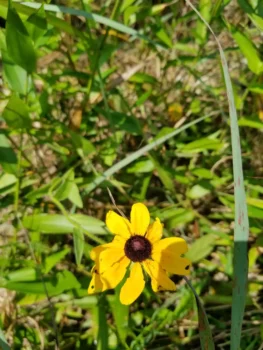
Black-Eyed Susan (Rudbeckia hirta var. pulcherrima): A Native Charmer for Every Garden
If you’re looking to add some sunny disposition to your garden while supporting local ecosystems, the black-eyed Susan variety pulcherrima might just be your new best friend. This cheerful native wildflower has been brightening North American landscapes for centuries, and it’s ready to do the same for your backyard.
What Makes This Black-Eyed Susan Special?
Black-eyed Susan (Rudbeckia hirta var. pulcherrima) is a true North American native, calling both Canada and the lower 48 states home. As a forb – that’s garden-speak for a non-woody flowering plant – this beauty brings vibrant color without the commitment of permanent woody structure.
What’s particularly interesting about this plant is its flexible life cycle. Depending on conditions, it can behave as an annual, biennial, or perennial, making it adaptable to various garden situations and giving you multiple seasons of enjoyment.
Where Does It Naturally Grow?
This black-eyed Susan variety has one of the most impressive native ranges you’ll find. It naturally occurs across a vast swath of North America, from Alberta to Newfoundland in Canada, and throughout virtually every U.S. state from coast to coast. Whether you’re gardening in Florida’s heat or Minnesota’s cold, this plant likely considers your area home.
- Species observed
- No observations
Why Plant Black-Eyed Susan in Your Garden?
There are several compelling reasons to welcome this native beauty into your landscape:
- Native plant benefits: As a true native, it supports local ecosystems and requires fewer resources than non-native alternatives
- Adaptable nature: Its ability to function as an annual, biennial, or perennial means it can fit various garden styles and maintenance preferences
- Low-maintenance appeal: Native plants are generally easier to grow since they’re adapted to local conditions
- Ecological value: Native plants typically provide better habitat and food sources for local wildlife
Garden Design and Landscape Role
As a forb, black-eyed Susan var. pulcherrima works beautifully in several garden settings:
- Wildflower meadows: Perfect for naturalized areas where you want that wild prairie look
- Native plant gardens: An essential component of any native plant collection
- Mixed perennial borders: Provides bright color and texture contrast
- Pollinator gardens: While specific pollinator data isn’t available for this variety, black-eyed Susans are generally excellent for supporting beneficial insects
Growing Your Black-Eyed Susan
While specific growing requirements for this particular variety aren’t detailed in available resources, black-eyed Susans as a group are known for being remarkably adaptable and low-maintenance. Here are some general guidelines that likely apply:
- Sunlight: Most black-eyed Susans prefer full sun but can tolerate some shade
- Soil: Generally adaptable to various soil types, often preferring well-draining conditions
- Water: Typically drought-tolerant once established, making them perfect for low-water gardens
- Maintenance: Usually requires minimal care beyond occasional deadheading if desired
The Bottom Line
Black-eyed Susan var. pulcherrima represents everything we love about native plants: it’s beautiful, adaptable, and ecologically valuable. Its massive native range means it’s likely well-suited to your local conditions, and its flexible life cycle gives you options for how to incorporate it into your garden design.
Whether you’re creating a wildlife habitat, establishing a low-maintenance landscape, or simply wanting to add some native charm to your garden, this black-eyed Susan variety deserves serious consideration. Plus, there’s something deeply satisfying about growing plants that truly belong in your local landscape – it’s gardening in harmony with nature.
Ready to welcome this native beauty into your garden? Your local ecosystem (and your future self) will thank you for choosing a plant that’s both gorgeous and gives back to the environment.