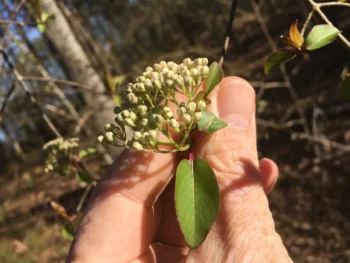
Blackhaw: The Unsung Hero of Native Landscaping
If you’re looking for a native shrub that delivers year-round interest without demanding constant attention, let me introduce you to blackhaw (Viburnum prunifolium). This delightful native might not have the flashiest name in the plant world, but don’t let that fool you – it’s a true garden gem that deserves a spot in more American landscapes.
What is Blackhaw?
Blackhaw is a native perennial shrub that typically grows 10-16 feet tall with a similar spread. As a multi-stemmed woody plant, it develops an attractive, somewhat irregular form that adds character to any landscape. This slow-growing beauty has a long lifespan, making it an excellent investment for gardeners who appreciate plants that stick around for decades.
You might also encounter this plant under its scientific synonyms like Viburnum bushii, but regardless of what you call it, you’re getting the same fantastic native species.
Where Does Blackhaw Call Home?
Blackhaw is proudly native to the lower 48 states, with an impressive natural range covering much of eastern and central North America. You’ll find it growing wild in states from Connecticut down to Georgia, west through Texas, and up into Wisconsin. This extensive distribution includes Alabama, Arkansas, Connecticut, Delaware, District of Columbia, Georgia, Illinois, Indiana, Iowa, Kansas, Kentucky, Louisiana, Maryland, Michigan, Mississippi, Missouri, New Jersey, New York, North Carolina, Ohio, Oklahoma, Pennsylvania, South Carolina, Tennessee, Texas, Virginia, West Virginia, and Wisconsin.
- Species observed
- No observations
Why Your Garden Will Love Blackhaw
Here’s where blackhaw really shines – it’s like the reliable friend who always shows up when you need them. This shrub offers multiple seasons of interest:
- Spring: Clusters of creamy white flowers create a stunning display that attracts bees and butterflies
- Summer: Lush green foliage provides a perfect backdrop for other garden plants
- Fall: The real showstopper – brilliant orange to red fall color that rivals any maple
- Winter: Dark blue-black berries persist into winter, feeding birds when food is scarce
The flowers are particularly valuable for pollinators, providing nectar when many native bees and butterflies are actively foraging in late spring.
Perfect Garden Roles
Blackhaw is wonderfully versatile in the landscape. It works beautifully as:
- A specimen plant where its natural form can be appreciated
- Part of a mixed native shrub border
- An understory planting in woodland gardens
- A key component in wildlife-friendly landscapes
- Naturalized plantings where low maintenance is essential
This shrub particularly excels in native plant gardens, woodland settings, and any landscape where you want to support local wildlife while enjoying year-round beauty.
Growing Conditions That Make Blackhaw Happy
One of blackhaw’s best qualities is its adaptability. This native thrives in USDA zones 3-9, making it suitable for most American gardens. Here’s what it prefers:
- Soil: Adaptable to both fine and medium-textured soils with pH ranging from 4.8 to 7.5
- Moisture: Medium water needs with decent drought tolerance once established
- Light: Shade tolerant, though it performs well in partial sun too
- Climate: Handles temperatures as low as -33°F and needs at least 110 frost-free days
Blackhaw has a Facultative Upland wetland status across most regions, meaning it usually grows in non-wetland areas but can handle occasional wet conditions – perfect for those tricky spots in your yard that are sometimes soggy.
Planting and Care Made Simple
Here’s the best part about blackhaw – it’s refreshingly low-maintenance once established:
- Planting: Best planted in spring or fall when temperatures are moderate
- Spacing: Give it room to grow – plan for its eventual 16-foot spread
- Watering: Water regularly during the first year, then it can largely fend for itself
- Fertilizing: Low fertility requirements mean you can skip the frequent feeding
- Pruning: Minimal pruning needed; just remove dead or damaged branches
- Propagation: Can be grown from seed (though it’s slow to germinate) or purchased as container plants
The seeds require cold stratification, so if you’re growing from seed, be patient – this plant rewards the long view.
Wildlife Benefits
Blackhaw is a wildlife magnet. The spring flowers provide nectar for native bees and butterflies, while the fall berries feed dozens of bird species through the lean winter months. The dense branching also provides nesting sites for smaller birds.
Should You Plant Blackhaw?
If you’re looking for a truly low-maintenance native shrub that offers multi-season interest and supports local wildlife, blackhaw is an excellent choice. It’s particularly perfect for gardeners who want to create more sustainable landscapes with native plants that have evolved to thrive in local conditions.
The only downside? Its slow growth rate means you’ll need patience to see its full potential. But for gardeners who appreciate plants that improve with age and require minimal fussing, blackhaw is absolutely worth the wait.
Ready to add this native beauty to your landscape? Look for blackhaw at native plant nurseries or specialty retailers – it’s routinely available and will reward your garden (and local wildlife) for decades to come.