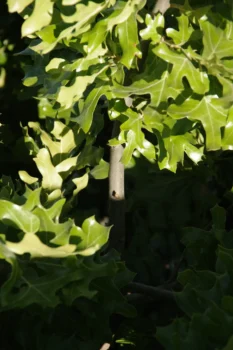
Blackjack Oak: A Tough-as-Nails Native Shrub for Your Garden
Meet the blackjack oak (Quercus marilandica var. ashei), a scrappy little native that’s been quietly thriving in the American heartland long before any of us thought about drought-tolerant landscaping. This pint-sized member of the mighty oak family might not tower over your garden like its forest-dwelling cousins, but what it lacks in height, it more than makes up for in personality and resilience.
What Makes This Oak Special?
Unlike the towering oaks you might picture in your mind, this blackjack oak variety is actually a shrub that typically stays under 13-16 feet tall. It’s a perennial woody plant that develops multiple stems from the ground, creating a bushy, naturalistic appearance that fits beautifully into modern landscape designs.
This particular variety goes by the scientific name Quercus marilandica var. ashei, though you might occasionally see it listed under older names like Quercus marilandica var. ashii or Quercus neoashei in some references.
Where Does It Call Home?
This tough little oak is a true native of the south-central United States, naturally occurring in Kansas, Oklahoma, and Texas. It’s perfectly adapted to the challenging growing conditions of this region, from scorching summers to unpredictable weather patterns.
- Species observed
- No observations
Why Your Garden (and Local Wildlife) Will Love It
Here’s where this oak really shines as a landscape plant:
- Drought tolerance: Once established, it laughs in the face of dry spells
- Low maintenance: Perfect for gardeners who want beauty without the fuss
- Native credentials: Supports local ecosystems and wildlife
- Compact size: Fits into smaller spaces where larger oaks wouldn’t work
- Naturalistic appeal: Adds authentic regional character to landscapes
Perfect Garden Situations
This blackjack oak variety is particularly well-suited for:
- Native plant gardens and naturalized landscapes
- Xeriscapes and drought-tolerant plantings
- Wildlife gardens in its native range
- Informal hedge or screening applications
- Areas where you want the oak aesthetic without the massive size
Growing Conditions and Care
The beauty of this native shrub is its easygoing nature. Here’s what it needs to thrive:
Sunlight: Full sun is ideal, though it can tolerate some light shade
Soil: Well-draining soil is essential. It’s not picky about soil type but doesn’t like wet feet
Water: Drought-tolerant once established, but regular watering during the first year helps it get settled
Climate: Hardy in USDA zones 6-9, making it perfect for much of the central and southern United States
Planting and Establishment Tips
Getting your blackjack oak off to a good start is straightforward:
- Plant in spring or fall when temperatures are moderate
- Dig a hole twice as wide as the root ball but no deeper
- Water regularly the first year while roots establish
- Mulch around the base to retain moisture and suppress weeds
- Be patient – like most oaks, it may take a year or two to really take off
The Bottom Line
If you’re gardening in Kansas, Oklahoma, or Texas and looking for a native plant that combines toughness with natural beauty, the blackjack oak variety deserves serious consideration. It’s not the flashiest plant in the garden center, but it’s exactly the kind of reliable, regionally appropriate choice that creates landscapes with both character and sustainability.
This little oak proves that sometimes the best garden plants are the ones that have been quietly succeeding in your area for centuries. Why fight your local climate when you can work with it instead?