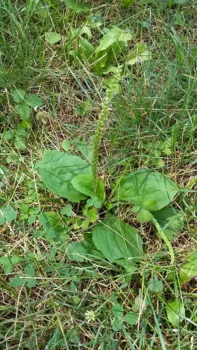
Blackseed Plantain: A Humble Native with Hidden Garden Value
Meet blackseed plantain (Plantago rugelii), a plant that might not win any beauty contests but certainly deserves a spot in your consideration for native gardening. This unassuming perennial forb might look like just another weed to the untrained eye, but it’s actually a hardworking native species with some surprising benefits for wildlife-friendly gardens.
What Exactly Is Blackseed Plantain?
Blackseed plantain is a low-growing perennial that forms neat rosettes of broad, oval-shaped leaves close to the ground. As a forb (essentially a non-woody flowering plant), it lacks any significant woody tissue and keeps its growing points right at or below ground level – a smart survival strategy that helps it bounce back year after year.
Don’t expect showy blooms from this practical plant. Instead, you’ll see slender, inconspicuous flower spikes that appear above the leaf rosettes. While these flowers won’t stop traffic, they serve an important purpose in the ecosystem.
Where Does Blackseed Plantain Call Home?
This adaptable native has quite an impressive range across North America. You can find blackseed plantain naturally growing throughout most of the eastern and central United States, from Alabama up to the northern states, and west into the Great Plains. It’s also established itself in several Canadian provinces, though it’s considered non-native there.
The plant thrives in USDA hardiness zones 3-9, making it suitable for most temperate North American gardens.
- Species observed
- No observations
Why Consider Blackseed Plantain for Your Garden?
Let’s be honest – you’re probably not going to plant blackseed plantain for its stunning visual appeal. However, this humble native offers several compelling reasons to welcome it into your landscape:
- Wildlife magnet: The seeds are particularly valuable for birds, especially finches and other seed-eating species
- Tough and adaptable: Handles poor soils and challenging conditions where other plants might struggle
- Low maintenance: Once established, it pretty much takes care of itself
- Ecological authenticity: Adds to the native plant diversity in naturalized areas
Where Does It Fit in Your Garden Design?
Blackseed plantain works best in informal, naturalized settings rather than formal flower borders. Consider it for:
- Wildlife gardens where function trumps form
- Meadow plantings and naturalized areas
- Ground cover in areas with challenging growing conditions
- Restoration projects on disturbed sites
- Bird-friendly landscapes focused on seed production
Growing Conditions and Care
One of blackseed plantain’s greatest strengths is its adaptability. This flexible native can handle a wide range of conditions:
- Light: Partial shade to full sun
- Soil: Tolerates poor, compacted, or disturbed soils
- Moisture: Moderate moisture preferred, but quite drought-tolerant once established
- pH: Adaptable to various soil pH levels
The plant’s wetland status varies by region – it can occur in both wetlands and uplands depending on local conditions, though it typically prefers non-wetland sites in most areas.
Planting and Care Tips
Growing blackseed plantain is refreshingly straightforward:
- Starting from seed: Direct sow seeds in fall or early spring; they need some cold stratification to germinate well
- Spacing: Allow 6-12 inches between plants, though they’ll often self-sow and fill in naturally
- Watering: Water regularly during establishment, then reduce as the plants become drought-tolerant
- Maintenance: Minimal care needed – just let it do its thing!
- Spreading: Be aware that it can self-sow readily in favorable conditions
A Word of Caution (Sort Of)
While blackseed plantain isn’t considered invasive, it can spread through self-seeding in favorable conditions. In a formal garden setting, you might find it popping up where you didn’t plan for it. However, in naturalized areas or wildlife gardens, this self-sowing tendency is often seen as a feature rather than a bug.
The Bottom Line
Blackseed plantain might not be the star of your garden show, but it’s definitely a reliable supporting cast member. If you’re creating habitat for wildlife, working with challenging growing conditions, or simply want to add some authentic native diversity to your landscape, this humble plantain deserves consideration.
Remember, not every native plant needs to be a showstopper – sometimes the quiet workhorses like blackseed plantain are exactly what our local ecosystems need most.