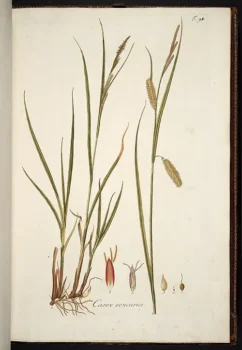
Blister Sedge: The Unsung Hero of Wet Gardens
If you’ve been searching for a native plant that thrives in those soggy spots where other plants fear to tread, meet your new best friend: blister sedge (Carex vesicaria). This hardy perennial sedge might not win any beauty contests, but it’s absolutely indispensable for anyone dealing with wet soil conditions or looking to create authentic wetland habitats.
What Makes Blister Sedge Special?
Blister sedge gets its quirky name from its distinctive inflated seed heads that look like tiny green balloons. This grass-like perennial forms dense, rhizomatous clumps that can reach up to 3 feet tall, creating substantial texture in the landscape. The fine-textured green foliage arches gracefully, and while the flowers aren’t showstoppers (they’re small and green), the overall effect is pleasantly naturalistic.
This sedge has an impressive list of botanical aliases, including former names like Carex inflata and Carex monile, reflecting its wide distribution and the attention it has received from botanists over the years.
Where Blister Sedge Calls Home
As a true native, blister sedge has an extensive natural range across North America. You’ll find it growing wild in Connecticut, Delaware, Idaho, Indiana, Kentucky, Maine, Maryland, Massachusetts, Michigan, Minnesota, Missouri, Montana, New Hampshire, New Jersey, New Mexico, New York, North Dakota, Ohio, Oregon, Pennsylvania, Rhode Island, Utah, Vermont, Washington, West Virginia, Wisconsin, and Wyoming. It’s also native to Canada and even extends to St. Pierre and Miquelon.
- Species observed
- No observations
This wide distribution tells you something important: blister sedge is incredibly adaptable to different climates, thriving in USDA hardiness zones 3 through 8.
Why Your Garden Needs Blister Sedge
Here’s where blister sedge truly shines – it’s classified as an Obligate Wetland plant across all regions of the United States. This means it almost always occurs naturally in wetlands, making it perfect for:
- Rain gardens and bioswales
- Pond and stream edges
- Wetland restoration projects
- Areas with seasonal flooding
- Naturalized landscapes
- Any persistently wet spot in your yard
Unlike many plants that sulk or die in constantly moist conditions, blister sedge absolutely loves having wet feet. Its high anaerobic tolerance means it can handle waterlogged soils that would spell doom for most garden plants.
Growing Blister Sedge Successfully
The good news is that if you can provide the right conditions, blister sedge is relatively low-maintenance. Here’s what it needs to thrive:
Soil Requirements
Blister sedge is remarkably adaptable when it comes to soil texture, growing happily in coarse, medium, or fine-textured soils. The pH can range from quite acidic (4.5) to neutral (7.5), giving you plenty of flexibility. The key requirement is consistent moisture – this plant has high moisture requirements and low drought tolerance.
Light and Location
This sedge prefers full sun but will tolerate partial shade with intermediate shade tolerance. In its natural habitat, it often grows in open wetlands with plenty of sunlight.
Climate Considerations
Extremely cold-hardy, blister sedge can survive temperatures as low as -38°F. It needs at least 80 frost-free days and grows actively during spring and summer months.
Planting and Care Tips
Blister sedge is routinely available commercially and can be propagated several ways:
- Bare root divisions (most common method)
- Seed (though seed abundance is low and germination can be slow)
- Sprigs from existing plants
Plant spacing should allow for 2,700 to 4,800 plants per acre, depending on how quickly you want coverage. The vegetative spread rate is moderate, so be patient – this isn’t a plant that will instantly fill large areas.
Once established, blister sedge requires minimal care. It has a moderate growth rate and lifespan, and while it doesn’t resprout after cutting, it’s quite resilient. Interestingly, it has high fire tolerance, making it valuable for areas prone to wildfires.
Wildlife and Ecological Benefits
While blister sedge may not attract clouds of butterflies like some flashier natives, it provides important ecological functions. Sedges like this one offer cover and nesting material for waterfowl and other wetland wildlife. The dense clumps create microhabitats for small amphibians and insects, contributing to overall ecosystem health.
Is Blister Sedge Right for Your Garden?
Blister sedge is an excellent choice if you:
- Have consistently wet or poorly drained areas
- Are creating a rain garden or bioswale
- Want to restore or create wetland habitat
- Prefer native plants with ecological value
- Need a low-maintenance solution for wet spots
However, it might not be the best fit if you have dry garden conditions or are looking for showy ornamental appeal. This is definitely a function over form plant that excels in specific niches.
With its impressive native range, excellent wetland credentials, and low-maintenance nature once established, blister sedge deserves serious consideration for any garden dealing with wet conditions. It may not be the flashiest plant in your landscape, but it might just be one of the most valuable for both your garden’s health and the local ecosystem.