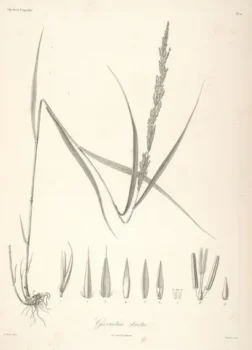
Blue Lawngrass: A Hardy Pacific Grass for Low-Maintenance Landscapes
Meet blue lawngrass (Garnotia stricta), a tough little perennial grass that’s made itself at home in Hawaii and other Pacific islands. While it might not be the showiest plant in your garden, this unassuming grass has some qualities that might surprise you – and a few considerations you should know about before deciding if it’s right for your landscape.
What Exactly Is Blue Lawngrass?
Blue lawngrass is a perennial grass that forms dense tufts of narrow, blue-green foliage. Don’t let the name fool you – it’s not actually blue, but rather has a subtle blue-green tint that gives it its common name. You might also see it listed under its scientific synonyms Garnotia acutigluma or Garnotia sandwicensis in older references.
This grass belongs to the graminoid family, which is just a fancy way of saying it’s part of the grass and grass-like plant group. It produces delicate seed heads that sway gently in ocean breezes – a characteristic that makes it quite at home in coastal environments.
Where Does Blue Lawngrass Come From?
Here’s where things get interesting from a native gardening perspective. Blue lawngrass is native to the Pacific Basin, but not to Hawaii. It’s originally from places like the Philippines and Indonesia, but has naturalized in Hawaii, Guam, and Palau, where it now reproduces spontaneously without human help.
- Species observed
- No observations
In Hawaii, this grass has established itself so well that it’s considered naturalized – it’s not going anywhere anytime soon. While it’s not native to the islands, it’s also not currently listed as invasive, putting it in that gray area that many gardeners face when choosing plants.
Why You Might (Or Might Not) Want Blue Lawngrass
Reasons to consider it:
- Extremely low maintenance once established
- Drought tolerant after establishment
- Good for erosion control on slopes
- Tolerates coastal conditions well
- Can handle both wetlands and drier areas (it’s classified as facultative for wetland status)
- Thrives in USDA hardiness zones 9-11
Reasons to think twice:
- Not native to Hawaii (or most places it’s now found)
- Limited wildlife and pollinator benefits
- Can spread via seeds, potentially crowding out native plants
- Not particularly ornamental or eye-catching
Growing Blue Lawngrass Successfully
If you decide blue lawngrass fits your landscape goals, you’ll find it refreshingly easy to grow. This grass isn’t picky about conditions – it can handle everything from full sun to partial shade and adapts to various soil types as long as drainage is decent.
Planting tips:
- Plant in well-draining soil
- Choose a spot with full sun to partial shade
- Space plants appropriately as they’ll spread over time
- Water regularly until established, then reduce watering
Care requirements:
- Minimal fertilization needed
- Drought tolerant once established
- May self-seed in favorable conditions
- Occasional trimming to maintain appearance
The Native Alternative Consideration
Since blue lawngrass isn’t native to Hawaii, you might want to consider native grass alternatives that provide similar benefits while supporting local ecosystems. Native Hawaiian grasses and sedges can offer comparable erosion control and low-maintenance qualities while providing better habitat for native wildlife.
Some native alternatives to research include indigenous Hawaiian sedges and grasses that are naturally adapted to your specific island’s conditions.
The Bottom Line
Blue lawngrass is a hardy, low-maintenance option for gardeners who need a tough grass for challenging sites. While it’s not native to Hawaii, it’s not currently considered invasive either. If you choose to plant it, just be mindful of its potential to spread and consider incorporating native plants elsewhere in your landscape to support local ecosystems.
Remember, the best plant for your garden is one that meets your needs while fitting responsibly into your local environment. Blue lawngrass might just be that plant – or it might inspire you to explore native alternatives that offer similar benefits with greater ecological value.