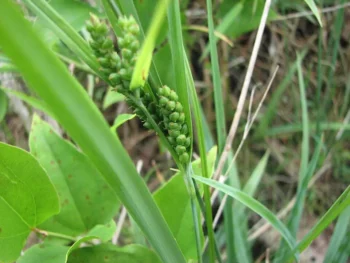
Blue Sedge: The Perfect Native Ground Cover for Shady Spots
If you’re looking for a low-maintenance, native ground cover that thrives in those tricky shady areas of your garden, blue sedge (Carex glaucodea) might just be your new best friend. This charming perennial sedge brings subtle beauty and ecological benefits to gardens across much of North America, making it a fantastic choice for gardeners who want to create sustainable, wildlife-friendly landscapes.
What Is Blue Sedge?
Blue sedge is a native perennial sedge that belongs to the grass-like family of plants. Don’t let the grass-like description fool you though – sedges have their own unique character that sets them apart from typical lawn grasses. This particular species gets its common name from its attractive blue-green to gray-green foliage that forms neat, clumping mounds in the landscape.
You might also encounter this plant listed under its botanical synonym Carex flaccosperma var. glaucodea, but Carex glaucodea is the currently accepted scientific name.
Where Blue Sedge Calls Home
Blue sedge is wonderfully widespread across eastern North America, naturally occurring from southeastern Canada down through much of the eastern United States. You’ll find it growing wild in states including Alabama, Arkansas, Connecticut, Delaware, Illinois, Indiana, Kentucky, Louisiana, Maryland, Massachusetts, Mississippi, Missouri, New Hampshire, New Jersey, New York, North Carolina, Ohio, Oklahoma, Pennsylvania, Tennessee, Texas, Virginia, and West Virginia, plus Ontario in Canada.
- Species observed
- No observations
Why Choose Blue Sedge for Your Garden?
There are plenty of compelling reasons to consider adding blue sedge to your landscape:
- Native plant benefits: As a native species, blue sedge supports local ecosystems and requires less water and maintenance than non-native alternatives
- Versatile moisture tolerance: This adaptable plant can handle both moist and moderately dry conditions, making it perfect for areas with variable moisture
- Shade tolerance: Unlike many plants that struggle in low light, blue sedge actually prefers partial to full shade
- Low maintenance: Once established, it practically takes care of itself
- Wildlife habitat: Provides nesting material and habitat for beneficial insects
- Erosion control: The clumping growth habit helps stabilize soil
Perfect Garden Settings
Blue sedge shines in several types of garden settings:
- Woodland gardens: Mimics its natural forest floor habitat
- Shade gardens: Provides texture and interest where other plants struggle
- Rain gardens: Its facultative wetland status means it can handle periodic flooding
- Naturalized landscapes: Perfect for low-maintenance, eco-friendly designs
- Ground cover applications: Creates attractive carpet-like coverage under trees and shrubs
Growing Conditions and Hardiness
Blue sedge is remarkably adaptable and forgiving, making it an excellent choice for beginning native plant gardeners. It thrives in USDA hardiness zones 4 through 8, covering most temperate regions of North America.
The ideal growing conditions include:
- Light: Partial to full shade (though it can tolerate some morning sun)
- Soil: Adaptable to various soil types including clay, loam, and sandy soils
- Moisture: Moist to moderately dry conditions; quite drought tolerant once established
- pH: Tolerates a wide range of soil pH levels
Planting and Care Tips
Getting blue sedge established in your garden is refreshingly straightforward:
Planting: Spring or fall are the best times to plant. Space plants about 12-18 inches apart if you’re creating a ground cover effect. The plants will gradually fill in the gaps as they mature.
Watering: Water regularly during the first growing season to help establish the root system. After that, blue sedge is quite drought tolerant and typically only needs supplemental watering during extended dry periods.
Maintenance: This is where blue sedge really shines – it’s incredibly low maintenance! Simply cut back the foliage in late winter or early spring before new growth begins. Every 3-4 years, you can divide clumps if they become too large or if you want to propagate more plants.
Fertilizing: Generally unnecessary. As a native plant, blue sedge is adapted to local soil conditions and doesn’t typically require additional fertilization.
The Bottom Line
Blue sedge is one of those wonderfully reliable native plants that delivers big benefits with minimal fuss. Whether you’re looking to create a low-maintenance ground cover, add texture to a shade garden, or support local wildlife, this adaptable sedge fits the bill perfectly. Its widespread native range means it’s likely well-suited to your local growing conditions, and its tolerance for various moisture levels makes it a smart choice for changing climate conditions.
For gardeners seeking sustainable, beautiful, and ecologically beneficial plants, blue sedge represents everything that’s great about native plant gardening – it’s attractive, low-maintenance, and perfectly at home in the landscape.