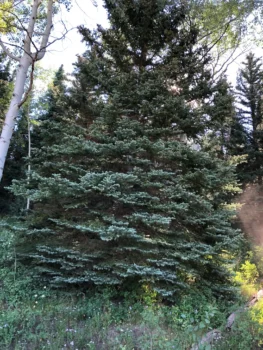
Blue Spruce: The Majestic Evergreen That Commands Attention
Few trees capture the imagination quite like the blue spruce, with its stunning silvery-blue needles and perfect Christmas tree silhouette. This magnificent evergreen has become a beloved fixture in landscapes across North America, and for good reason. But before you fall head over heels for this beauty, let’s explore what makes the blue spruce tick and whether it’s the right fit for your garden.
Meet the Blue Spruce
The blue spruce (Picea pungens), also known as the Colorado blue spruce, is a show-stopping evergreen tree that’s hard to miss. This perennial woody giant can live for decades, slowly reaching impressive heights of up to 100 feet at maturity. Don’t worry about it taking over your yard overnight, though – blue spruces are famously slow growers, typically reaching about 20 feet after 20 years.
What really sets this tree apart is its distinctive needle color, ranging from blue-green to striking silvery-blue, and its classic conical shape that maintains dense foliage year-round. The needles have a waxy coating that gives them their signature blue hue, making this tree a standout specimen in any landscape.
Where Blue Spruce Calls Home
Blue spruce is native to the Rocky Mountain region of the United States, naturally growing in Colorado, Wyoming, Utah, New Mexico, Arizona, and Idaho. However, this adaptable tree has found its way into gardens and landscapes far beyond its mountain origins, now growing in states like Maine, Maryland, Minnesota, New York, Pennsylvania, and even parts of Canada including Nova Scotia and Ontario.
- Species observed
- No observations
Why You Might Want to Plant Blue Spruce
There are plenty of compelling reasons to consider adding a blue spruce to your landscape:
- Year-round beauty: Those gorgeous blue-tinged needles provide color and structure through every season
- Low maintenance: Once established, blue spruces are relatively hands-off
- Wildlife habitat: Birds and small mammals appreciate the seeds and shelter this tree provides
- Windbreak potential: The dense foliage makes it excellent for blocking wind and creating privacy
- Cold hardy: Thrives in USDA hardiness zones 2-7, handling temperatures as low as -38°F
Before You Plant: Things to Consider
While blue spruce is undeniably beautiful, it’s not the perfect fit for every garden:
- Size matters: This tree gets BIG – make sure you have space for a 100-foot giant
- Slow growth: Patience is required as it takes decades to reach full size
- Fire sensitivity: Not the best choice for fire-prone areas
- Limited pollinator benefits: Wind-pollinated, so doesn’t attract many pollinators
- Regional considerations: If you’re outside its native range, consider local alternatives
Perfect Spots for Blue Spruce
Blue spruce works best as a specimen tree in large landscapes, parks, or commercial properties where it has room to spread out and show off. It’s ideal for:
- Large residential properties with plenty of space
- Mountain or alpine-style gardens
- Areas needing windbreaks or privacy screens
- Focal points in expansive lawns
- Commercial landscapes and municipal plantings
Growing Conditions: What Blue Spruce Needs to Thrive
Blue spruce is surprisingly adaptable but has some specific preferences:
- Soil: Prefers coarse to medium-textured, well-draining soils; avoid heavy clay
- pH: Tolerates a range from slightly acidic to slightly alkaline (5.5-7.8)
- Water: Moderate moisture needs with medium drought tolerance once established
- Sun: Intermediate shade tolerance but prefers full sun
- Climate: Needs at least 120 frost-free days and 20-45 inches of annual precipitation
Planting and Care Tips
Getting your blue spruce off to a good start is crucial for long-term success:
- Planting: Available as bare root or container plants; spring planting is typically best
- Spacing: Allow 300-700 trees per acre if mass planting
- Watering: Keep soil consistently moist (not waterlogged) during establishment
- Fertilizing: Medium fertility requirements – avoid over-fertilizing
- Pruning: Minimal pruning needed; remove dead or damaged branches as needed
- Root depth: Ensure at least 18 inches of soil depth for proper root development
Propagation and Availability
Good news for prospective blue spruce parents – this tree is routinely available in the nursery trade. It can be propagated by seed, cuttings, bare root, or container plants. Seeds are abundant and can be collected from summer through fall, though seedling vigor tends to be low initially.
The Bottom Line
Blue spruce is a magnificent tree that can serve as a stunning centerpiece in the right setting. Its slow growth means it’s an investment in your landscape’s future, and its cold hardiness makes it suitable for northern gardens where many other evergreens struggle. While it may not be the most pollinator-friendly choice and requires significant space, its year-round beauty and low-maintenance nature make it a worthwhile addition for those with room to accommodate its eventual grandeur.
If you’re outside its native Rocky Mountain range, consider exploring native evergreen alternatives that might provide similar benefits while supporting local ecosystems. But if you’ve got your heart set on those distinctive blue needles and have the space to let this tree shine, the blue spruce could be the perfect addition to your landscape legacy.