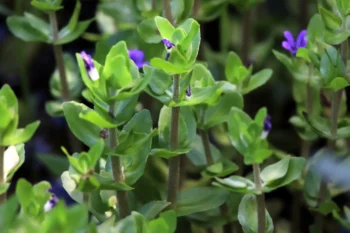
Blue Waterhyssop: A Native Gem for Water-Loving Gardeners
If you’re looking for a charming native plant that thrives in wet conditions, blue waterhyssop (Bacopa caroliniana) might just be your new best friend. This delightful perennial is one of those under-the-radar natives that deserves a spot in more gardens, especially if you’re dealing with soggy soil or want to create a water feature with authentic local flair.
What Makes Blue Waterhyssop Special?
Blue waterhyssop is a true southeastern native, naturally found across ten states from Virginia down to Texas. Despite its common name, don’t expect flashy blue blooms – this plant produces small, charming white flowers that add a delicate touch to any planting. The real star of the show is its succulent-like foliage that forms attractive creeping mats.
This little powerhouse is found naturally in Alabama, Florida, Georgia, Louisiana, Maryland, Mississippi, North Carolina, South Carolina, Texas, and Virginia, where it thrives in the wild wetlands and coastal areas that define the Southeast’s unique ecology.
- Species observed
- No observations
Why Your Garden Will Love Blue Waterhyssop
Here’s where blue waterhyssop really shines – it’s classified as an obligate wetland plant, meaning it absolutely loves water. If you’ve got that perpetually soggy spot in your yard that makes you scratch your head, this native could be your solution. It’s perfect for:
- Bog gardens and rain gardens
- Pond margins and water features
- Container water gardens
- Native plant landscapes
- Areas with consistently moist soil
The plant works beautifully as a ground cover, spreading by runners to create attractive carpets of foliage. Its small white flowers provide nectar for beneficial insects and small pollinators, adding to your garden’s ecological value.
Growing Blue Waterhyssop Successfully
The beauty of blue waterhyssop lies in its adaptability and ease of care. This native thrives in USDA hardiness zones 8-11, making it perfect for southern gardeners who want low-maintenance, water-loving plants.
Ideal Growing Conditions
- Light: Full sun to partial shade (though it performs best with at least 4-6 hours of direct sunlight)
- Soil: Consistently moist to wet soil – this plant can even handle being submerged
- pH: Adaptable to various pH levels
- Water: Lots! Remember, it’s an obligate wetland plant
Planting and Care Tips
Blue waterhyssop is refreshingly easy to grow once you understand its water-loving nature:
- Plant in spring after the last frost date
- Space plants 6-12 inches apart – they’ll fill in naturally
- Keep soil consistently moist to wet at all times
- Minimal fertilization needed – wetland soils are typically nutrient-rich
- Deadhead spent flowers to encourage continued blooming
- Divide spreading clumps every 2-3 years if desired
The plant spreads naturally by runners, so don’t be surprised when it starts forming attractive colonies. This spreading habit makes it excellent for erosion control near water features.
The Bottom Line
Blue waterhyssop is a fantastic choice for gardeners who want to embrace native plants while solving wet soil challenges. It’s low-maintenance, ecologically beneficial, and brings authentic regional character to water gardens and bog plantings. While it won’t work in dry, upland gardens, it’s absolutely perfect for those soggy spots where other plants struggle.
If you’re creating a rain garden, designing around a pond, or just trying to work with naturally wet areas in your landscape, blue waterhyssop offers a beautiful, native solution that supports local wildlife while requiring minimal care. Sometimes the best garden plants are the ones that simply want to grow where you need them most!